Detailed description:Detailed description:
ATTENTION!
On delivery our items are not laminated and not cut. The organizational aids such as boxes, card index boxes and the like that may be shown in the catalog are not included in the scope of delivery. We only used this accessory for demonstration purposes.
pages46
leaves46
Age7-11, 12-13
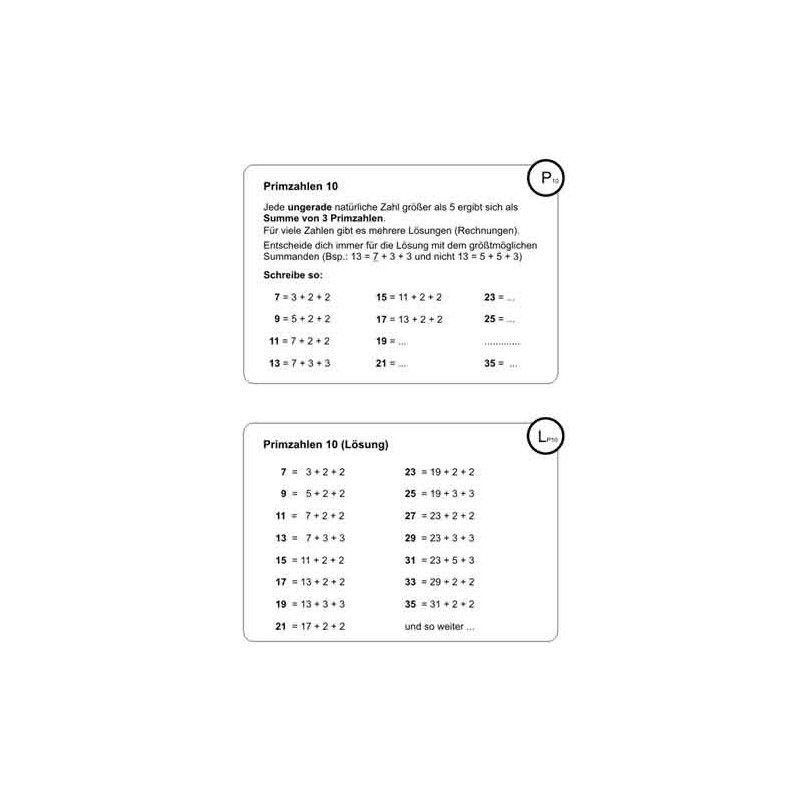
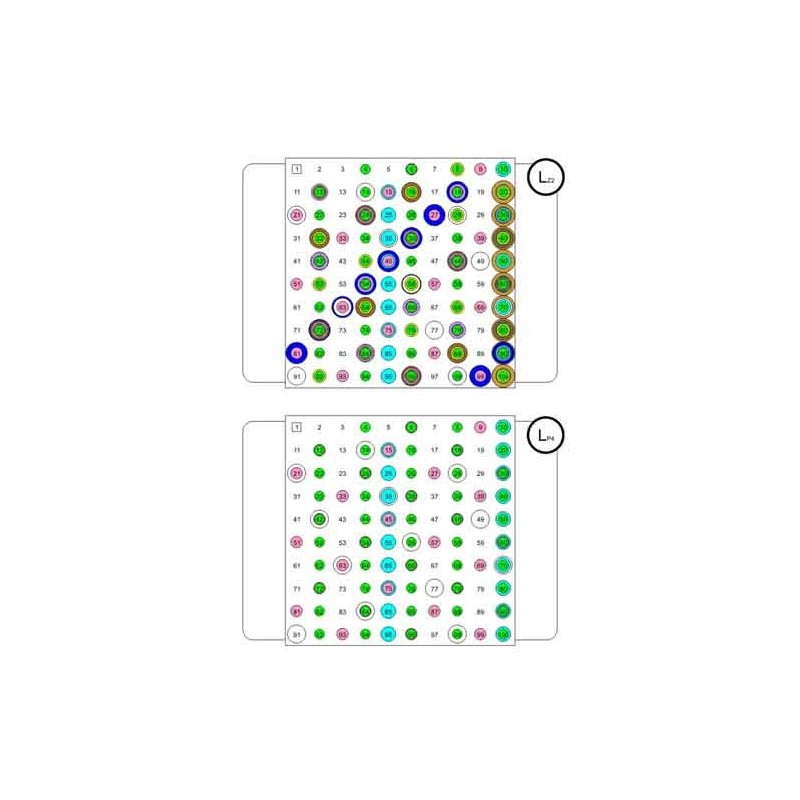
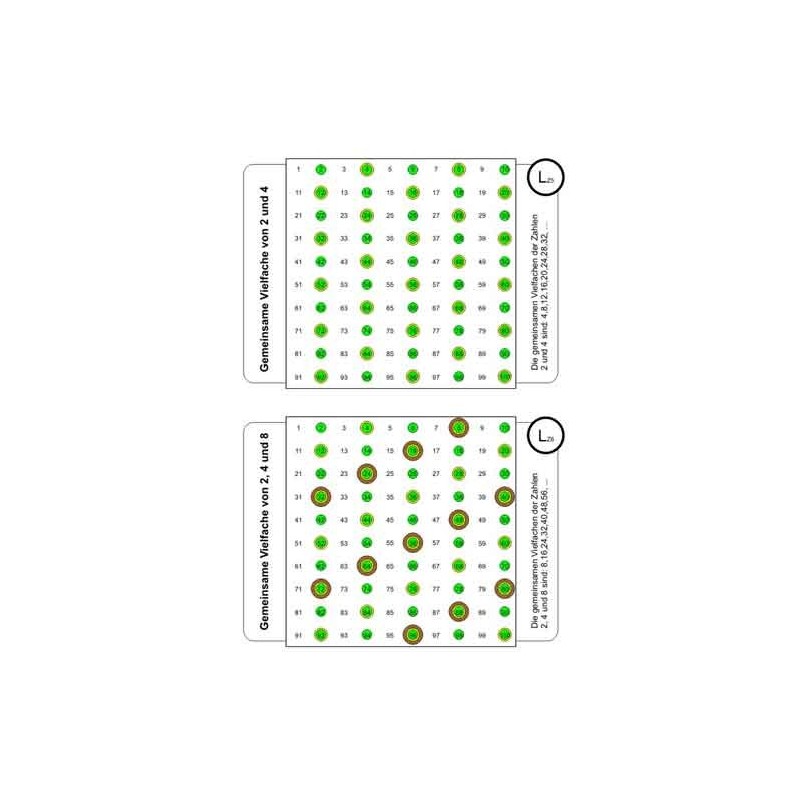
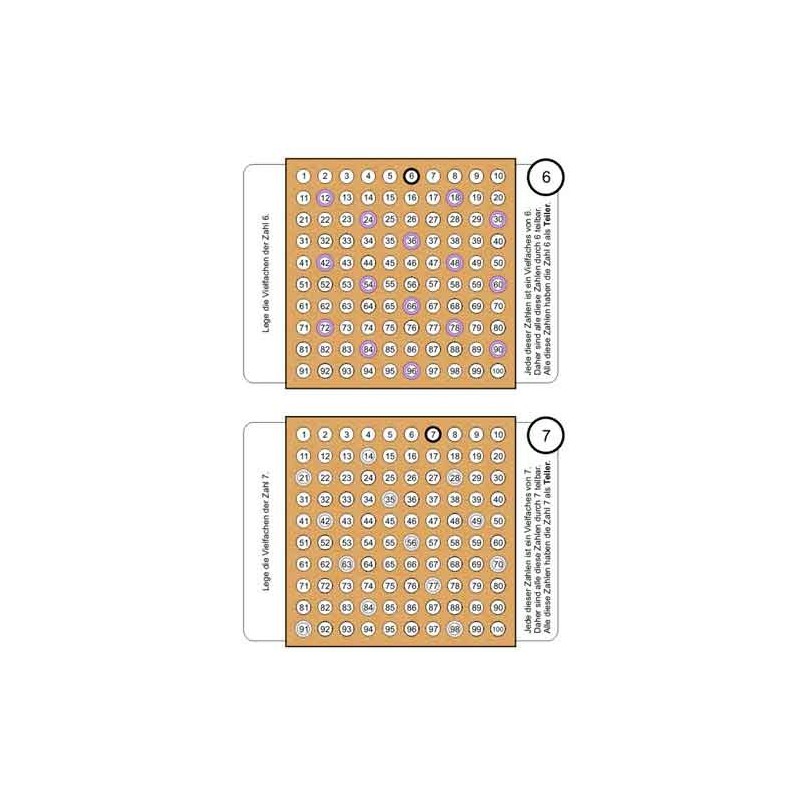
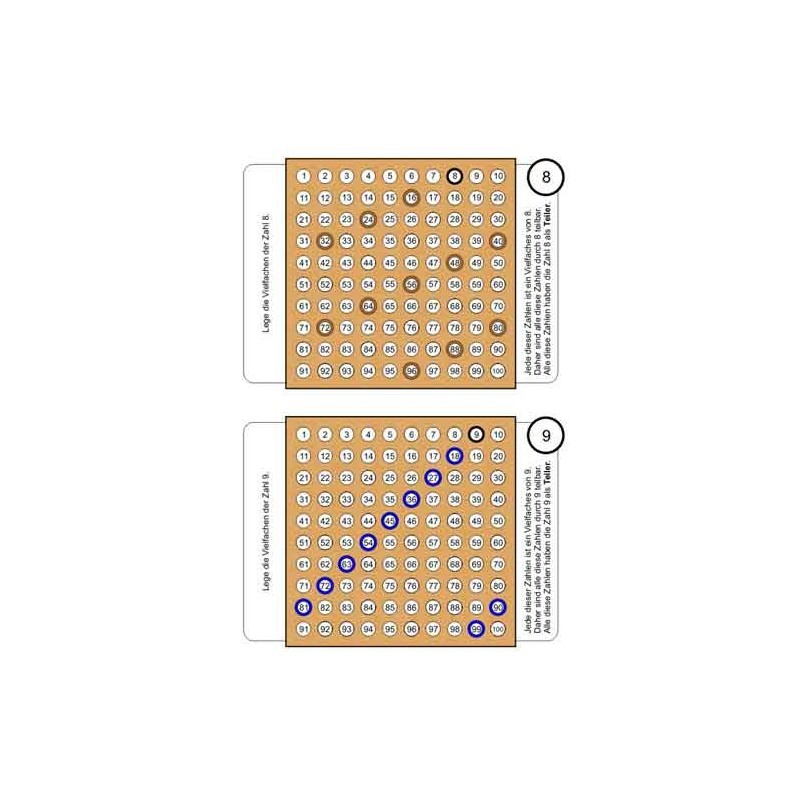
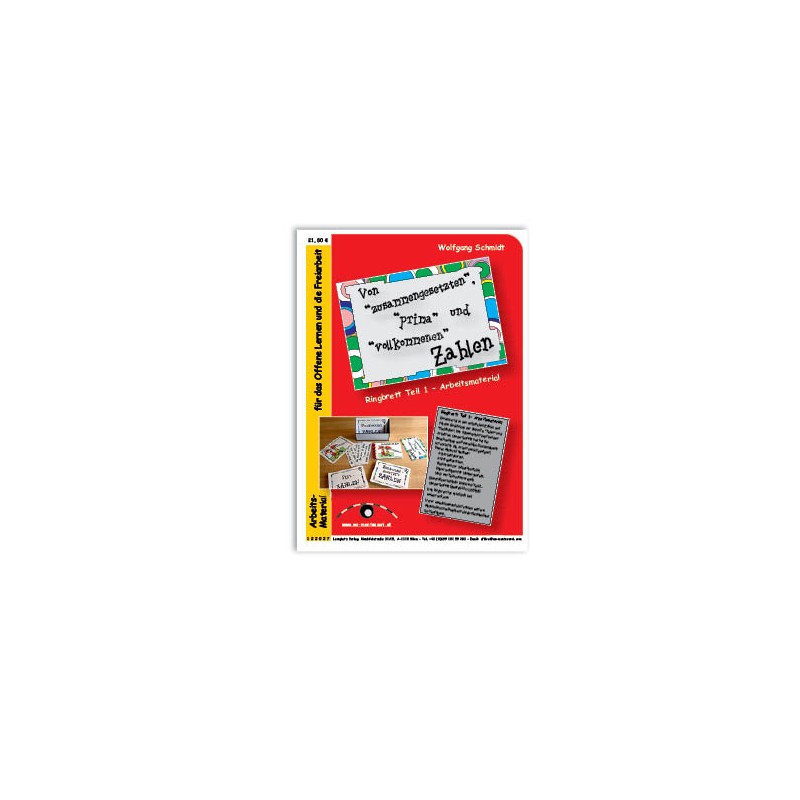
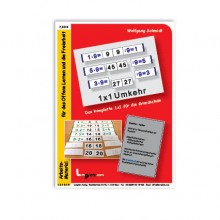
Brief descriptionWork on natural numbers (composite numbers, prime numbers and perfect numbers) introducing the terms "divisors" and "multiples"; the focus is on working in the hundreds field and describing prime numbers. The material is also very suitable for working on the 1x1. The use of the ring board from is recommended
scopeA5 work file, job cards, picture cards for self-control, templates for hundreds of fields, booklet with divisibility rules
ContributorsSaskia Haspel, Christiane Salvenmoser, Elisabeth Lehner-Jettmar
Additional articlesFree downloads available at www.lernmaterial.at
manualRecommended school level (s): 2nd-6th School level
Manufacturing: Laminate the sheets (recommended film thickness: 90-125 microns).
With the A5 index cards, first cut off the overlapping lamination edge and then cut the A4 page in half exactly in the middle - each gives 2 index cards A5.
Pages not to be laminated: 7 A4 templates;
Pages or cards that are bound into a booklet: booklet on the divisibility rules (14 A5 cards, 1 cover page)
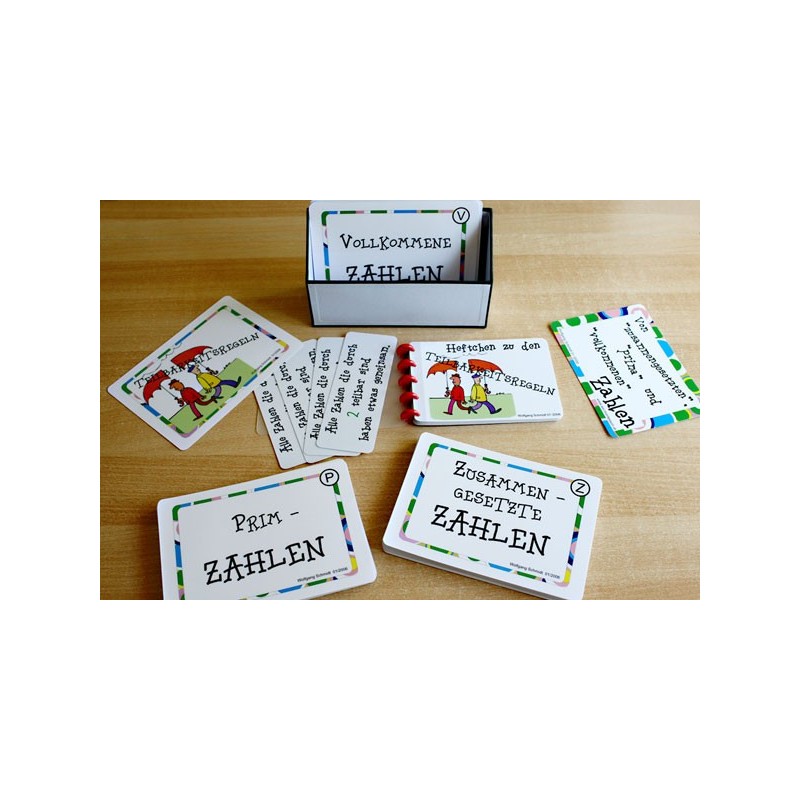
The material consists of 4 different parts:
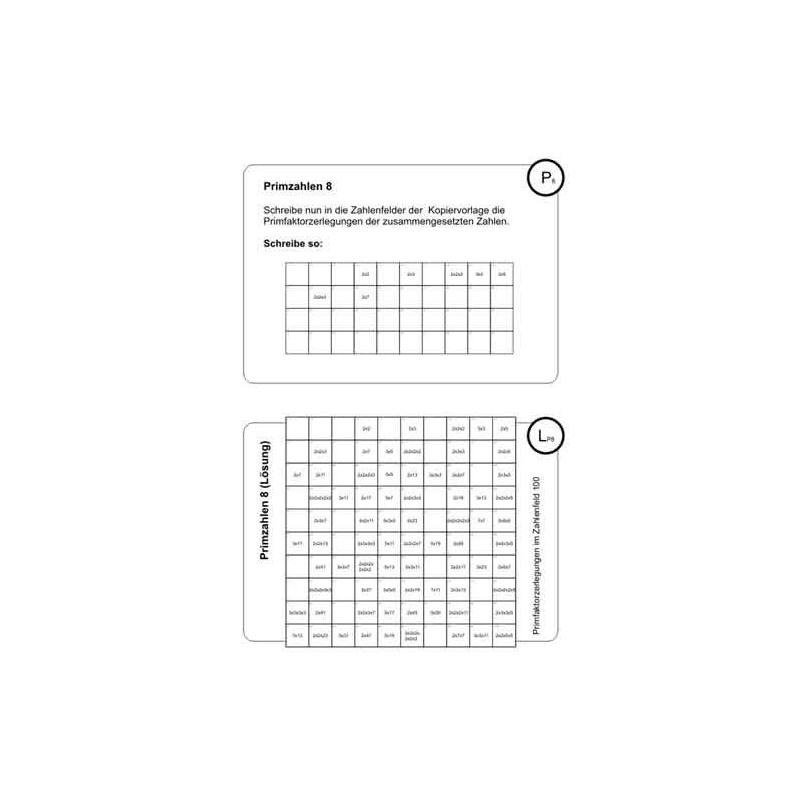
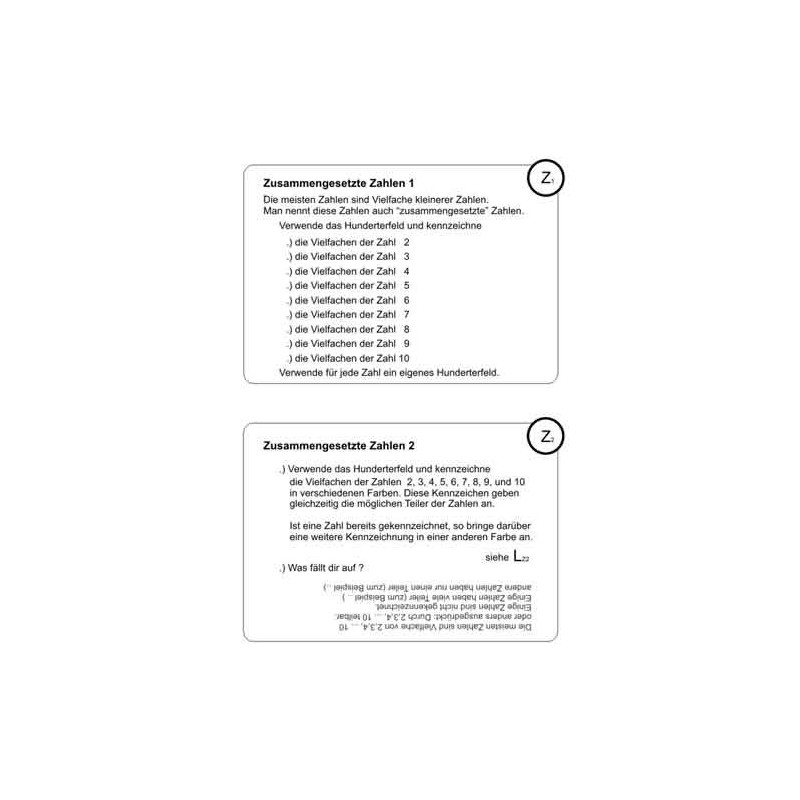
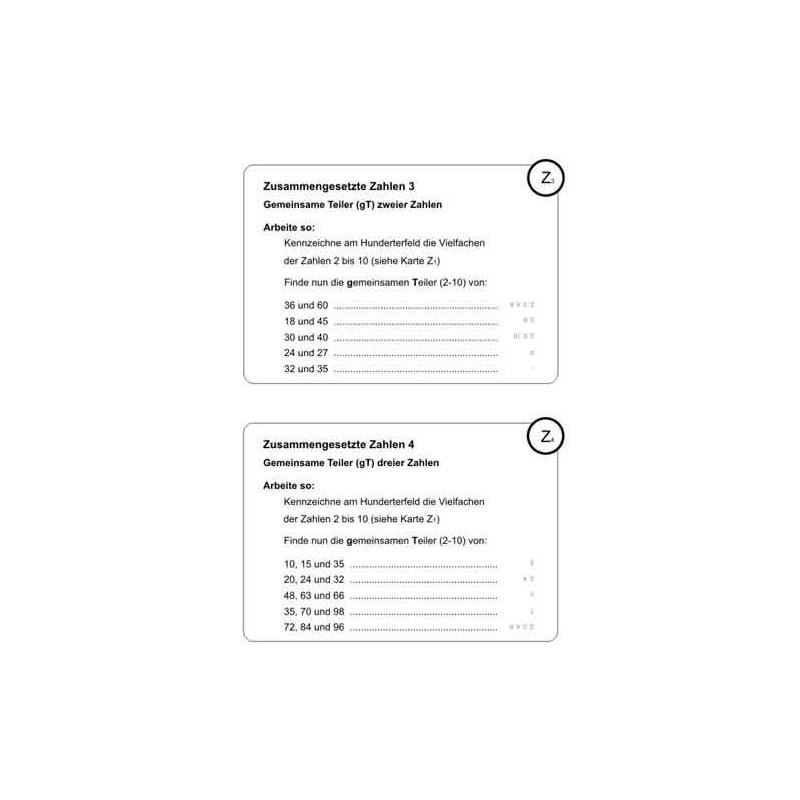
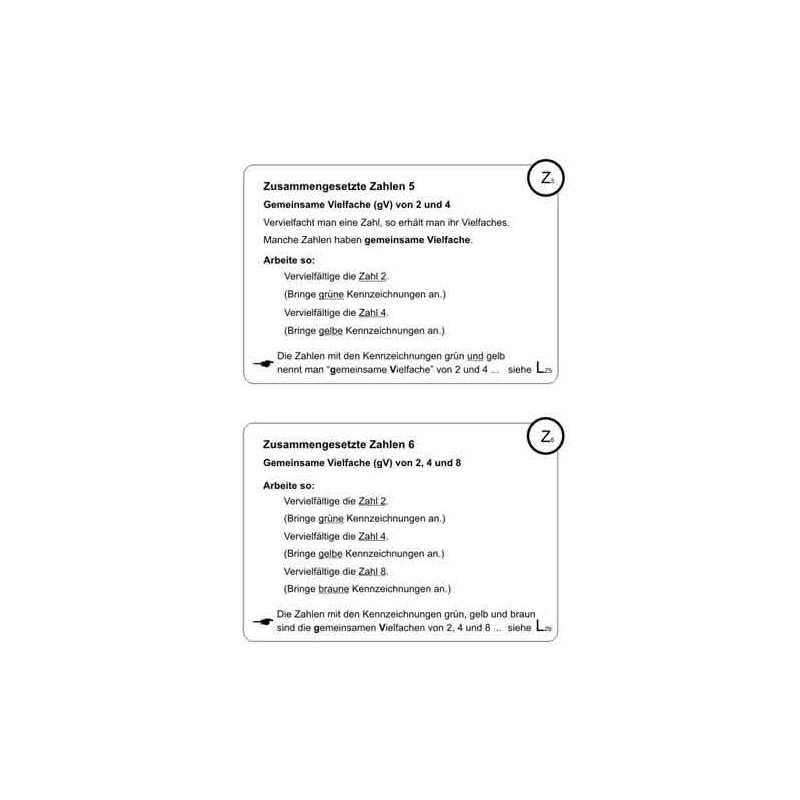
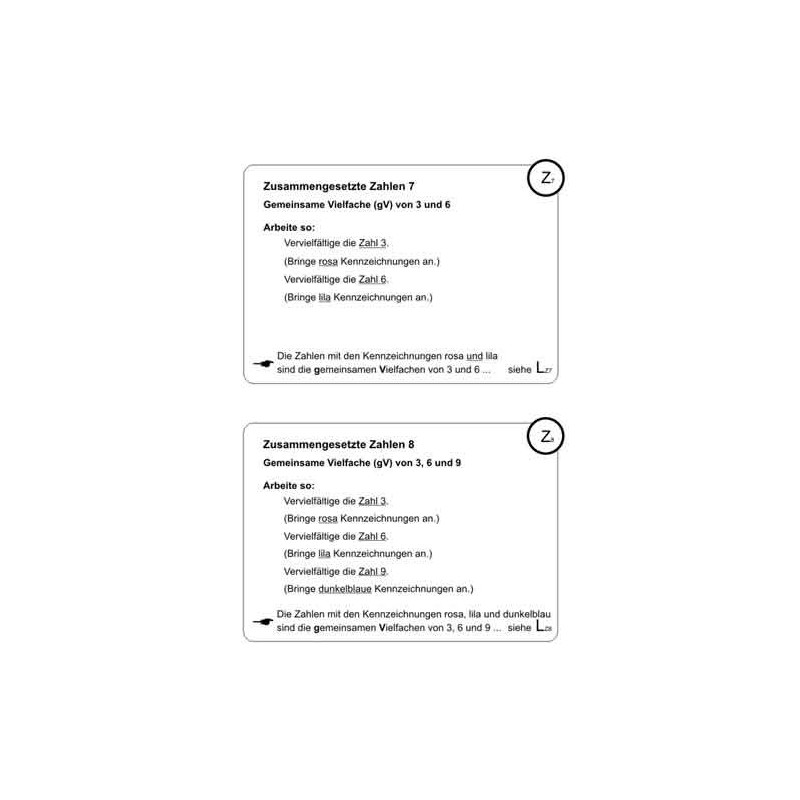
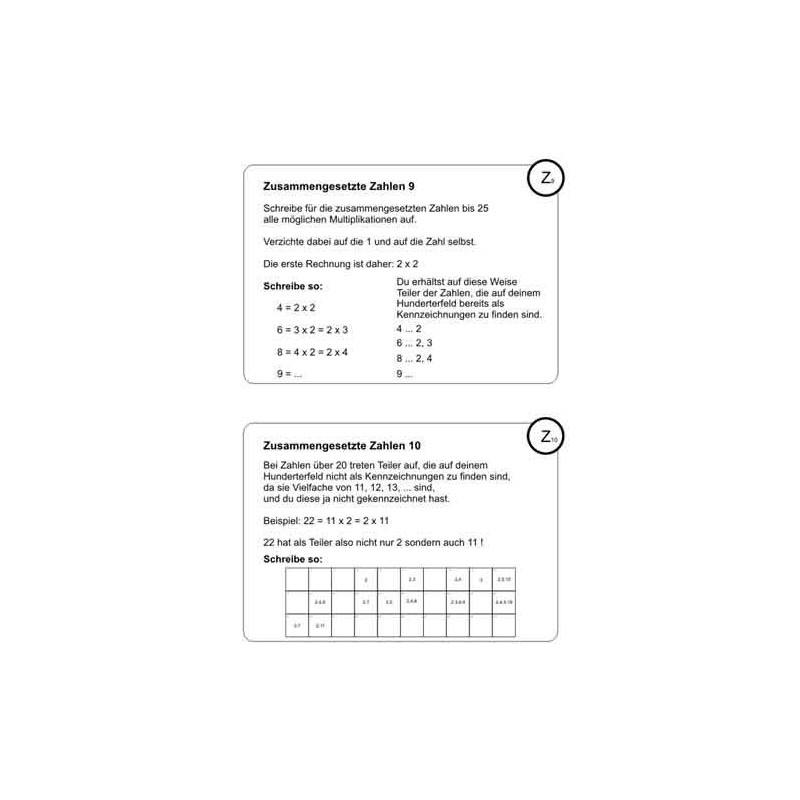
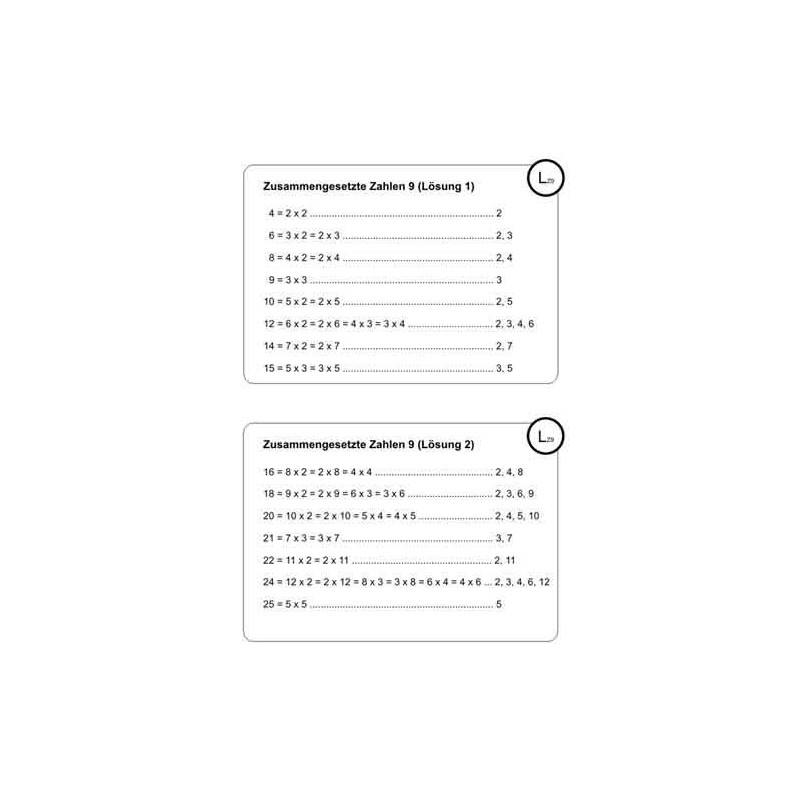
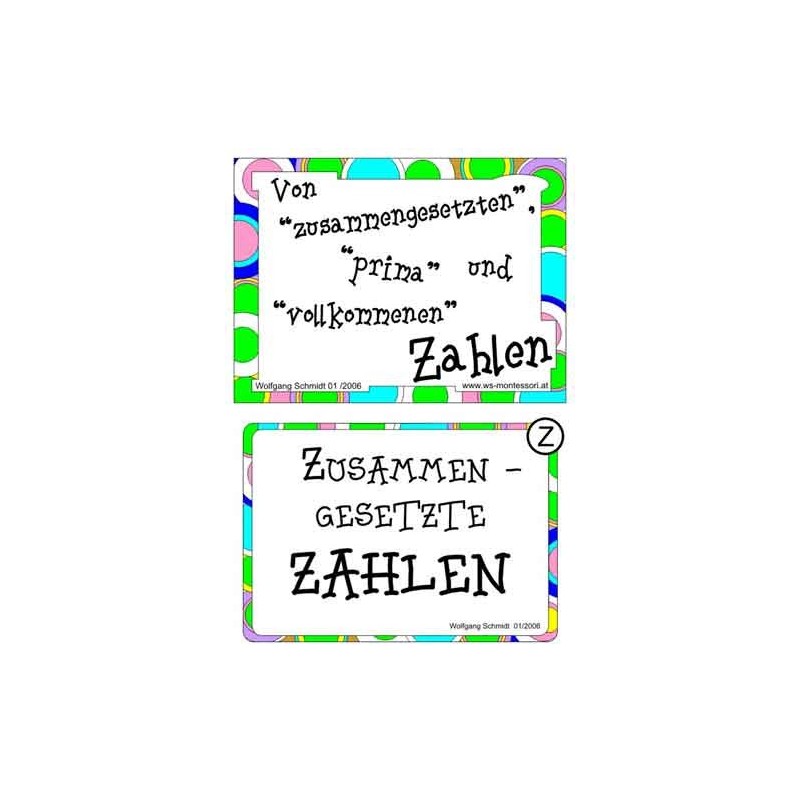
1. Compound numbers - this is about divisors and multiples
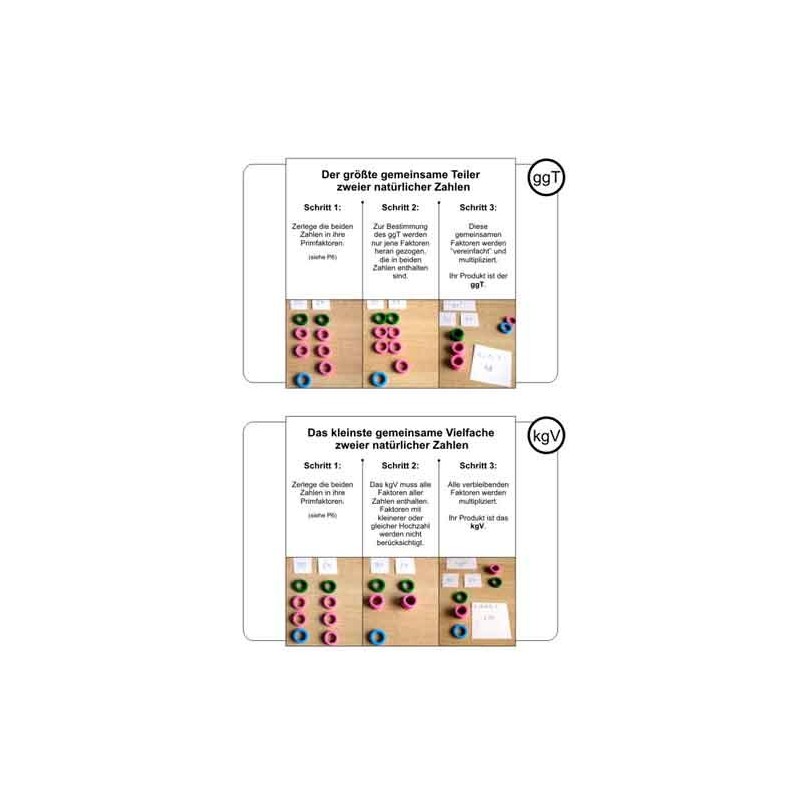
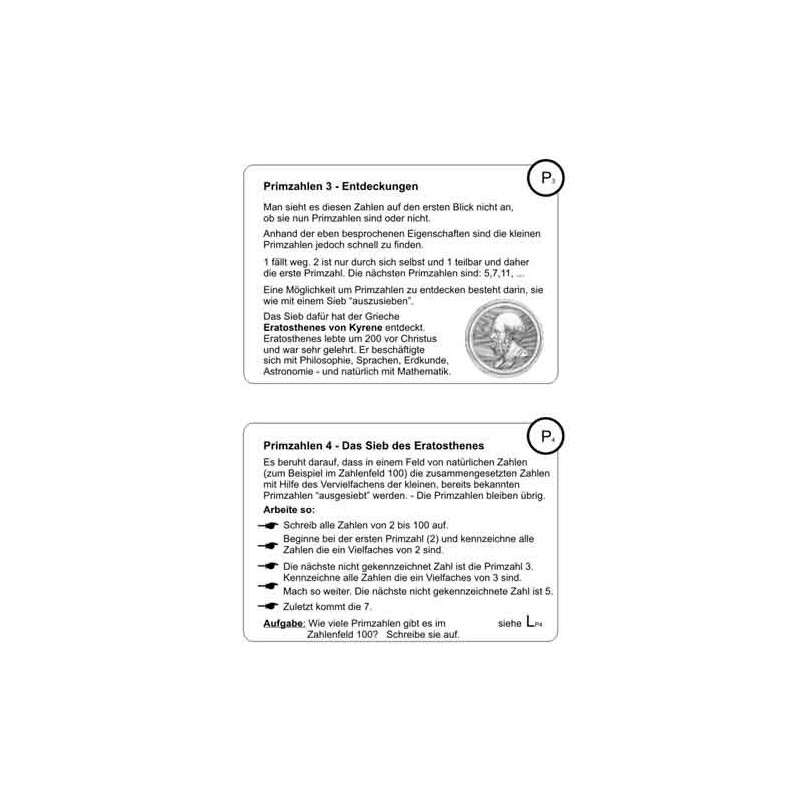
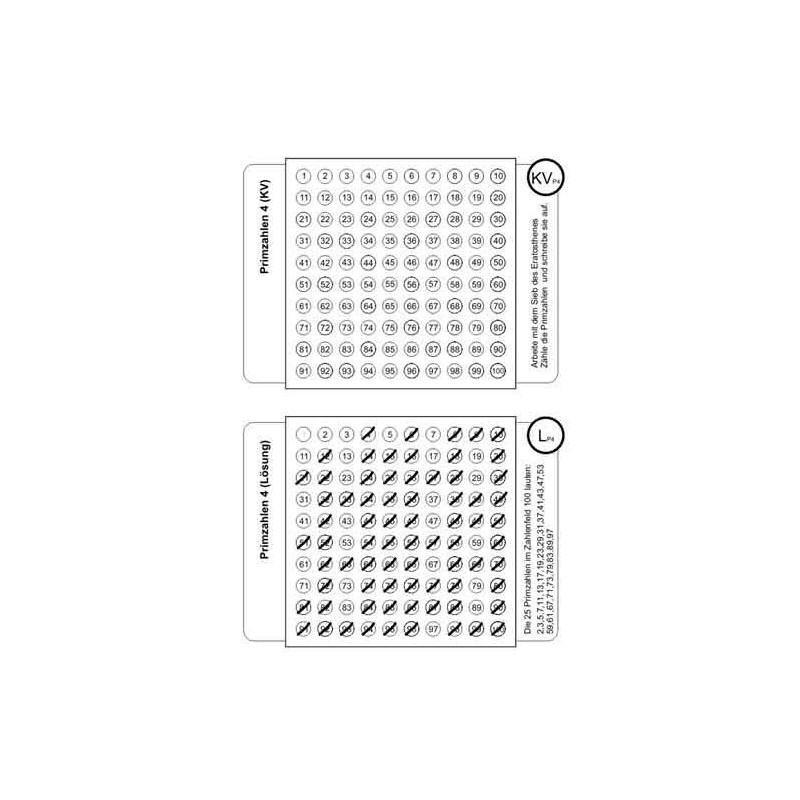
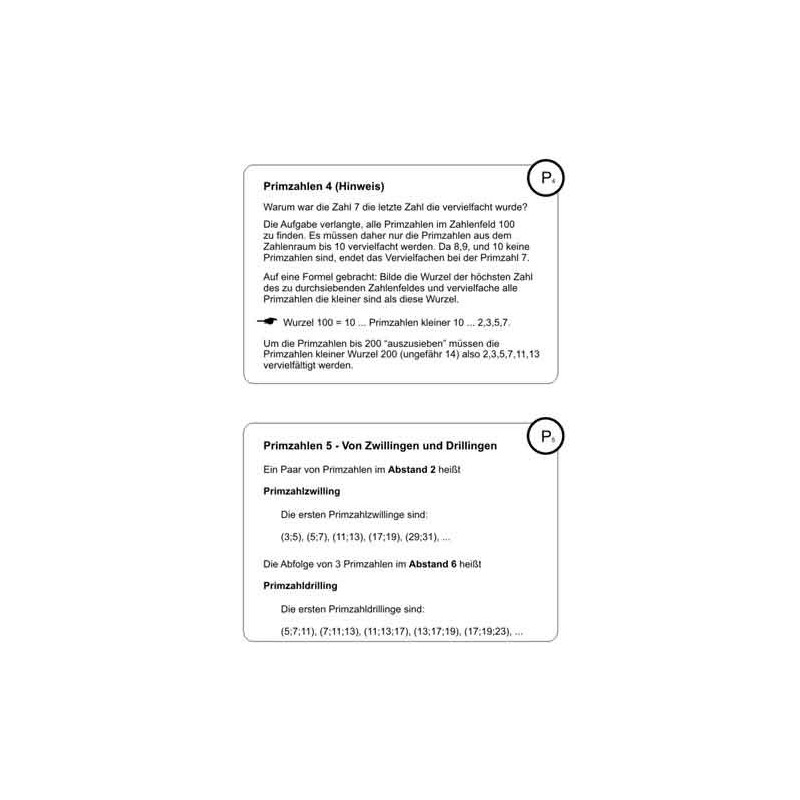
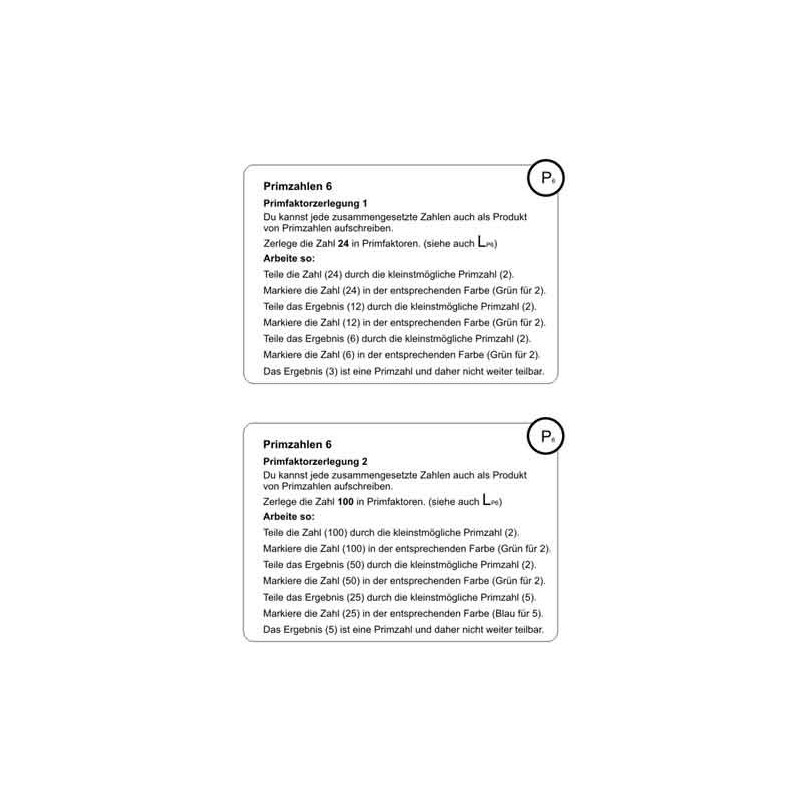
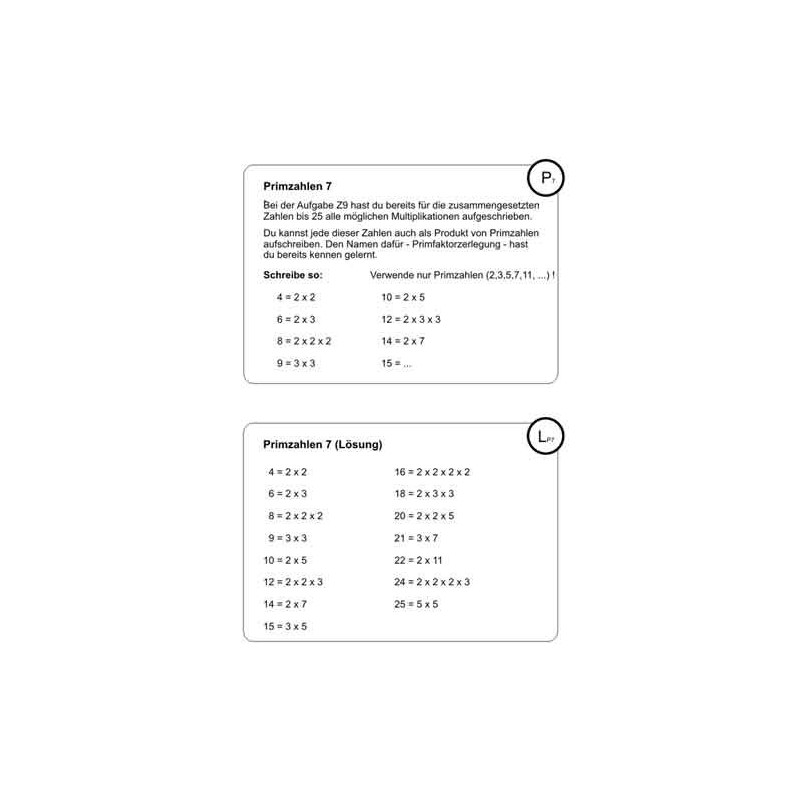
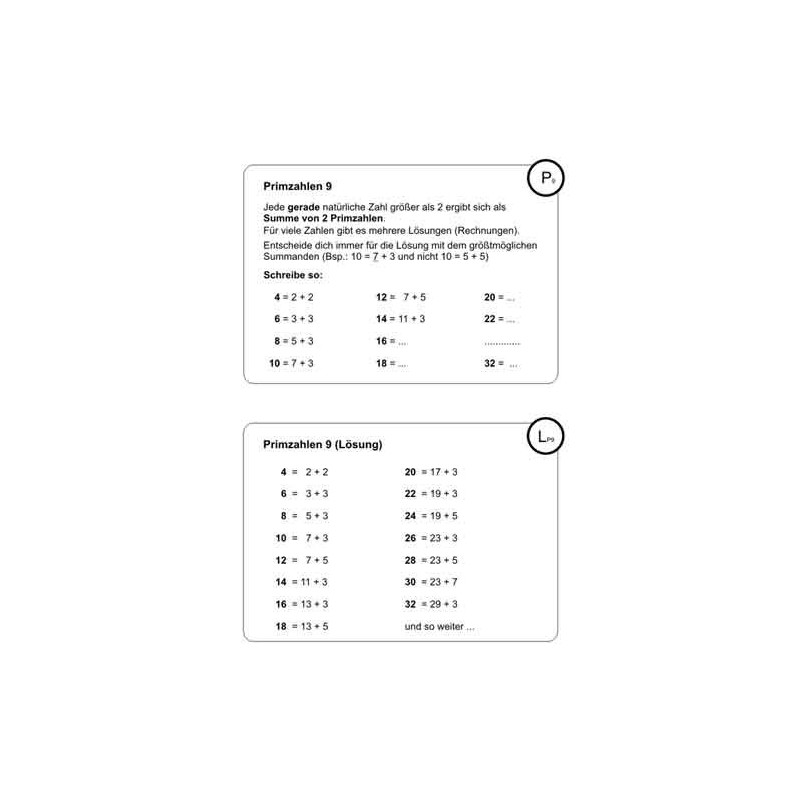
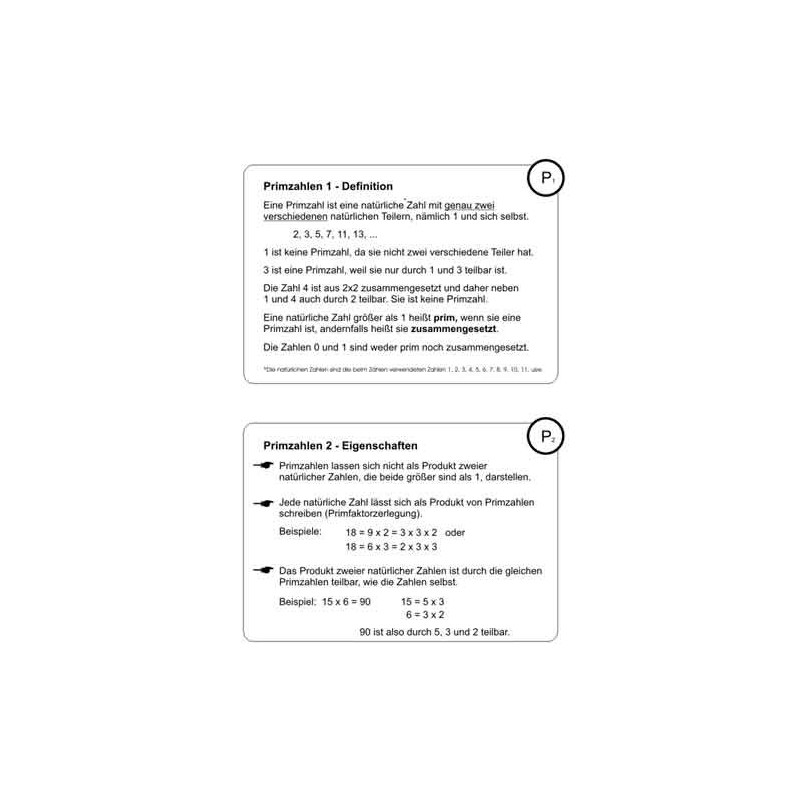
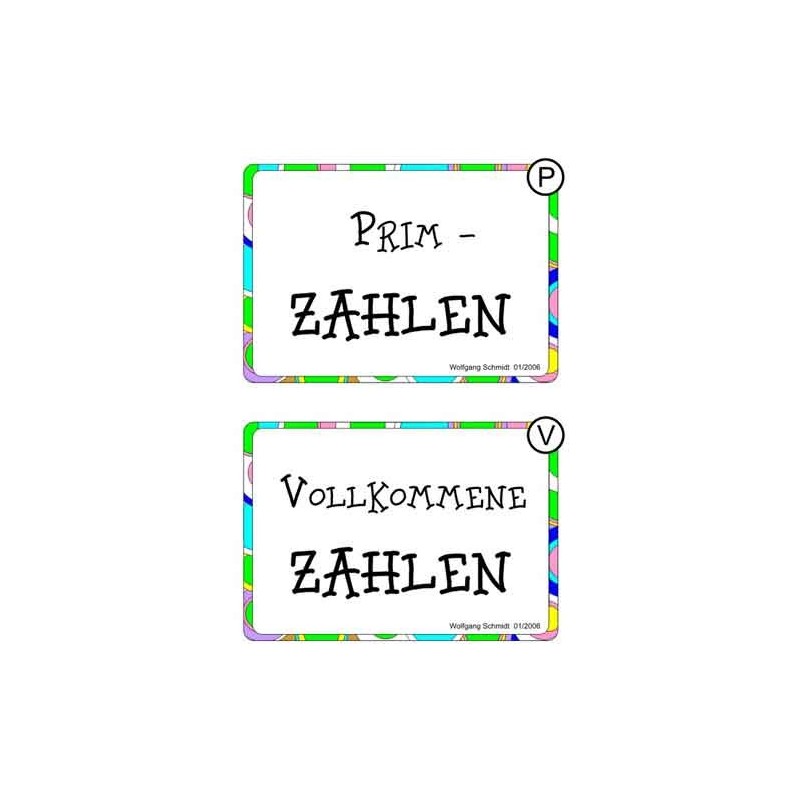
2. Prime numbers - definition, properties, determination of P, prime factorization
3. Perfect numbers - “delicacies” for fans of mathematics
4. Divisibility rules
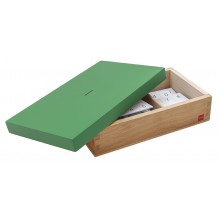
Therefore, four separate storage boxes (or file boxes) should be created!
Content / curriculum reference: This material covers curriculum content of different school levels:
Divisors and multiples as a topic of the 2nd and 3rd grade ... but the material goes beyond that
Prime numbers would then be more of a secondary school topic, as would ggT and kgV
Perfect numbers?
Due to the clarity and clarification of the material (ring board), depending on the possibility and interest on the part of the children, topics should also be offered that may only appear "later" in the curriculum. (I am thinking, for example, of squaring and square rooting, which can also be a lot of fun for children in the 2nd or 3rd grade - provided that there is concrete material, of course!)
Possible uses: Mathematics - divisors, multiples, numbers in the broadest sense
Use in free work, in individual work, in partner work or small group work.
Preparations: To work with this material, the children also need:
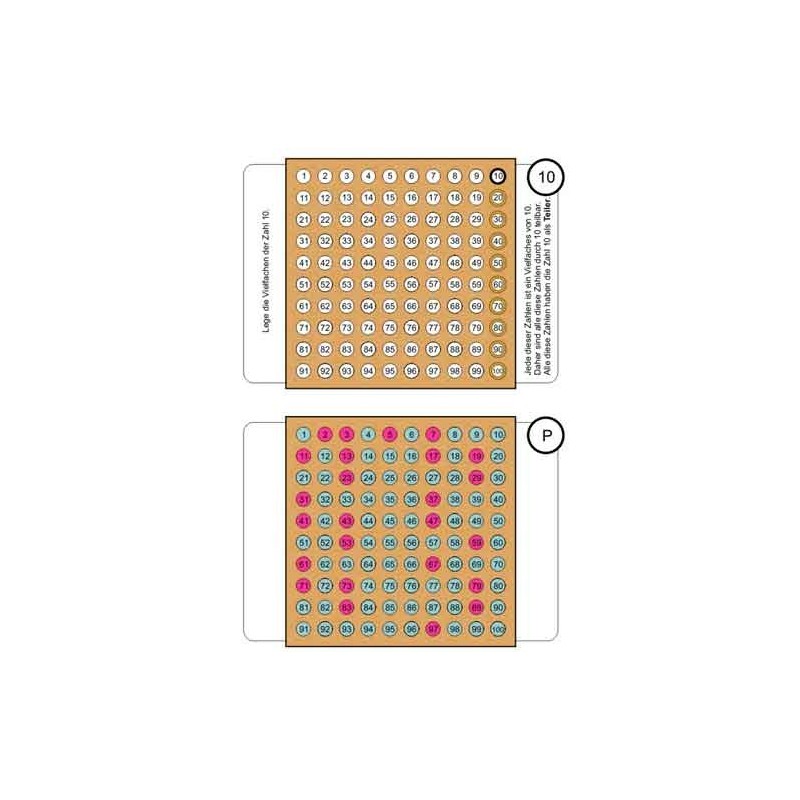
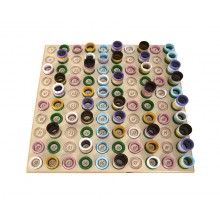
The Pruefl ring board:
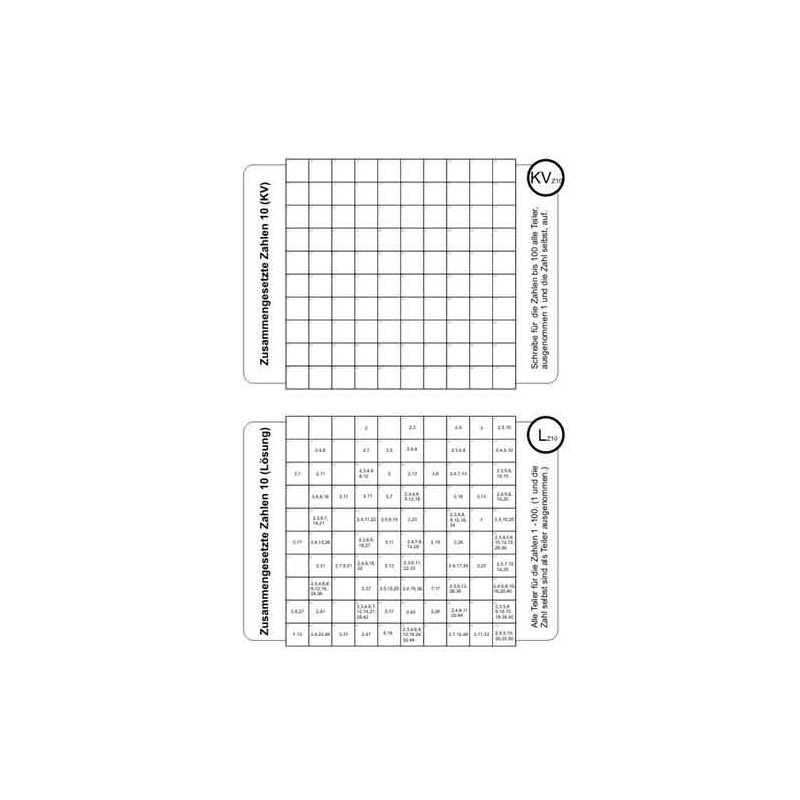
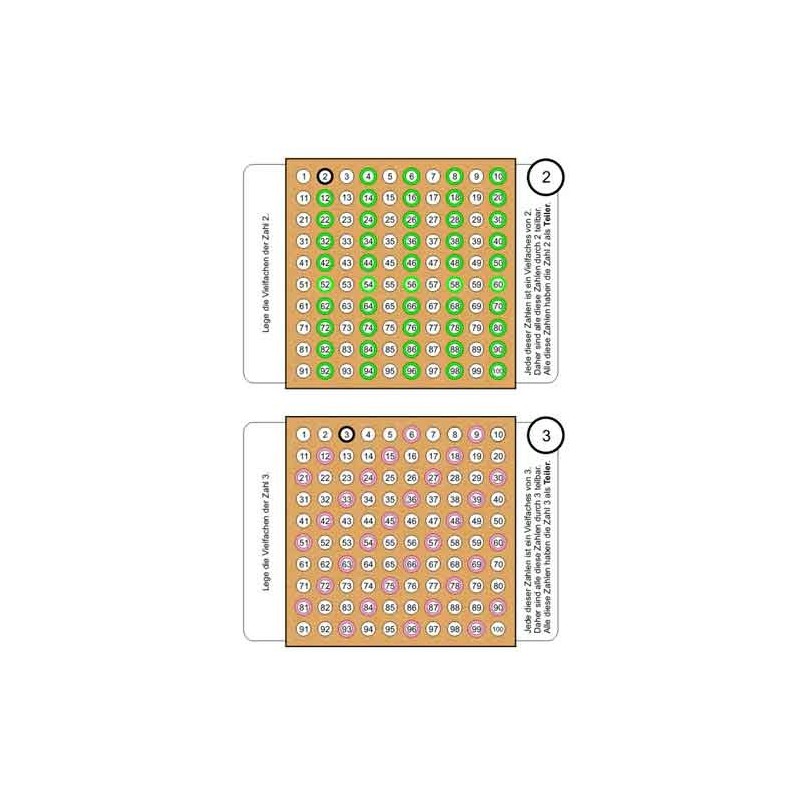
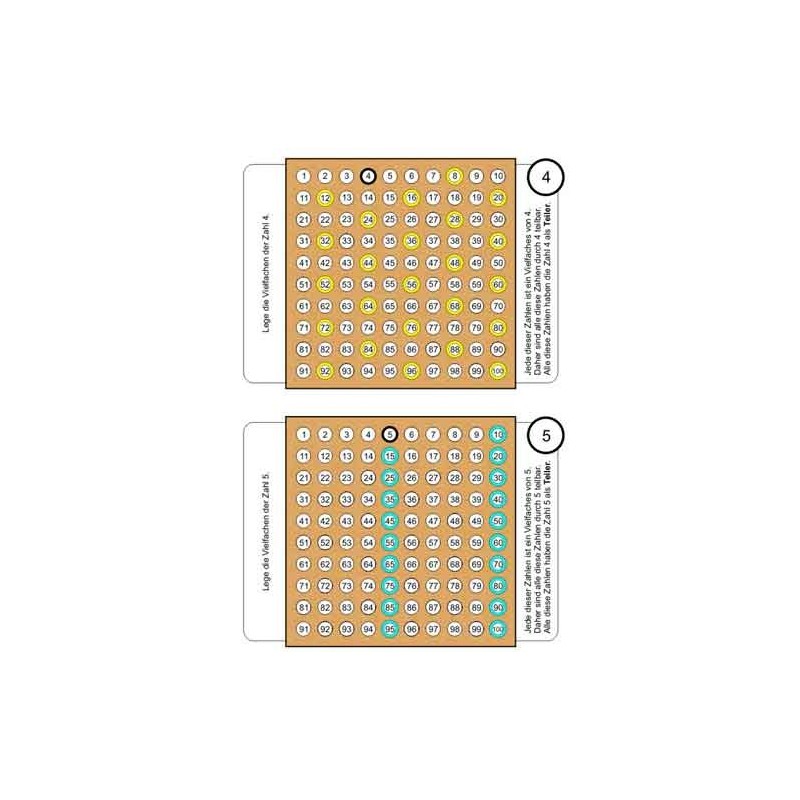
How it works: The focus is on working on the ring board. The working material (consisting of the 4 parts mentioned) guides the children. The index cards are marked and numbered and should be worked through in order. Each card contains specific work orders or solutions.
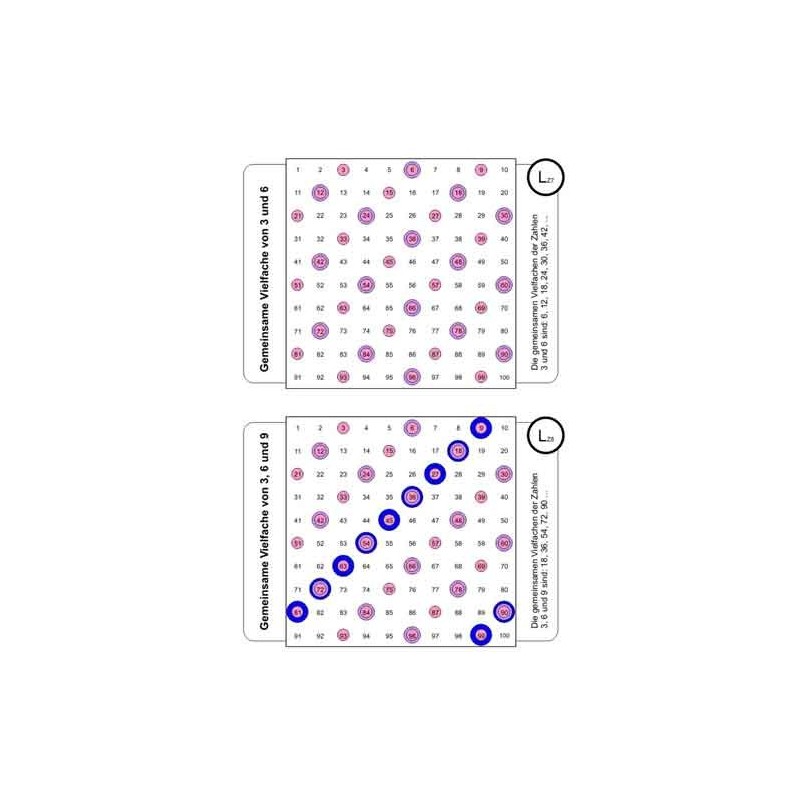
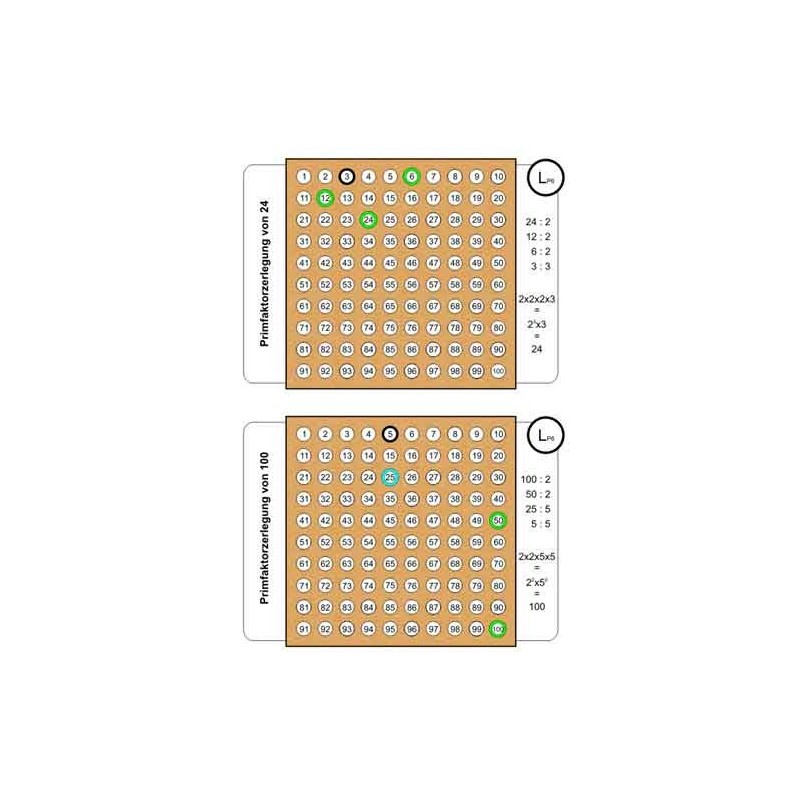
Self-control: The card index contains special solution cards, which are identified as such by an "L".
Experiences, tips, tips: "Ring board - Hunderterfeld" (also in the shop)
At
www.lernmaterial.at there are further materials (dominoes and laying boards).
pages46
leaves46
Age7-11, 12-13
Brief descriptionWork on natural numbers (composite numbers, prime numbers and perfect numbers) introducing the terms "divisors" and "multiples"; the focus is on working in the hundreds field and describing prime numbers. The material is also very suitable for working on the 1x1. The use of the ring board from is recommended
scopeA5 work file, job cards, picture cards for self-control, templates for hundreds of fields, booklet with divisibility rules
ContributorsSaskia Haspel, Christiane Salvenmoser, Elisabeth Lehner-Jettmar
Additional articlesFree downloads available at www.lernmaterial.at
manualRecommended school level (s): 2nd-6th School level
Manufacturing: Laminate the sheets (recommended film thickness: 90-125 microns).
With the A5 index cards, first cut off the overlapping lamination edge and then cut the A4 page in half exactly in the middle - each gives 2 index cards A5.
Pages not to be laminated: 7 A4 templates;
Pages or cards that are bound into a booklet: booklet on the divisibility rules (14 A5 cards, 1 cover page)
The material consists of 4 different parts:
1. Compound numbers - this is about divisors and multiples
2. Prime numbers - definition, properties, determination of P, prime factorization
3. Perfect numbers - “delicacies” for fans of mathematics
4. Divisibility rules
Therefore, four separate storage boxes (or file boxes) should be created!
Content / curriculum reference: This material covers curriculum content of different school levels:
Divisors and multiples as a topic of the 2nd and 3rd grade ... but the material goes beyond that
Prime numbers would then be more of a secondary school topic, as would ggT and kgV
Perfect numbers?
Due to the clarity and clarification of the material (ring board), depending on the possibility and interest on the part of the children, topics should also be offered that may only appear "later" in the curriculum. (I am thinking, for example, of squaring and square rooting, which can also be a lot of fun for children in the 2nd or 3rd grade - provided that there is concrete material, of course!)
Possible uses: Mathematics - divisors, multiples, numbers in the broadest sense
Use in free work, in individual work, in partner work or small group work.
Preparations: To work with this material, the children also need:
The Pruefl ring board:
How it works: The focus is on working on the ring board. The working material (consisting of the 4 parts mentioned) guides the children. The index cards are marked and numbered and should be worked through in order. Each card contains specific work orders or solutions.
Self-control: The card index contains special solution cards, which are identified as such by an "L".
Experiences, tips, tips: "Ring board - Hunderterfeld" (also in the shop)
At
www.lernmaterial.at there are further materials (dominoes and laying boards).