Detailed description: Detailed description:
ATTENTION!
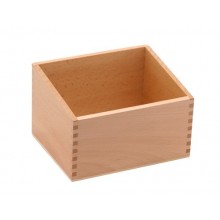
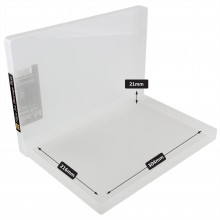
On delivery our items are not laminated and not cut. The organizational aids such as boxes, card index boxes and the like that may be shown in the catalog are not included in the scope of delivery. We only used this accessory for demonstration purposes.
pages 18th
leaves 18th
Age 7-11
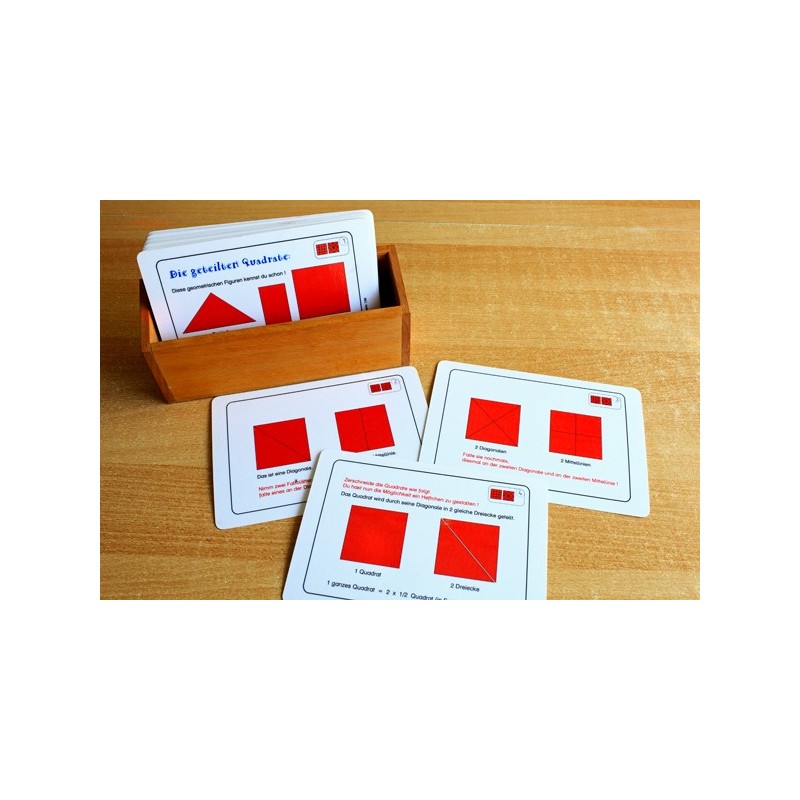
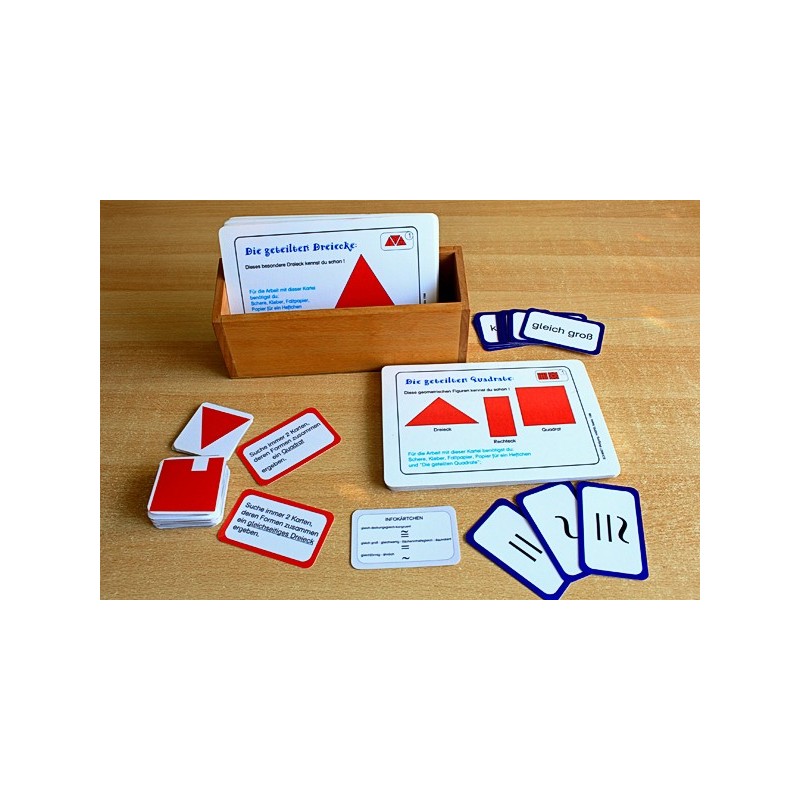
Brief description Step-by-step development of basic geometric terms such as: diagonal, center line, congruent, equivalent, similar, ... 2 laying materials: "What belongs together?"
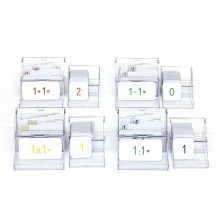
scope 15 index cards (squares), 12 index cards (triangles), 13 concept and symbol cards, 2 placement games
Contributors Saskia reel
manual Recommended school level (s): 3rd - 6th grade (material goes beyond the curriculum of the primary school!)
Manufacturing: All sheets should be laminated (recommended film thickness: 90-125 microns).
First cut off the protruding laminating edge and then cut the A4 page in half exactly in the middle - each gives 2 A5 index cards.
Pages not to be laminated: none
Pages or cards bound in a booklet: none
Content / curriculum reference: The children gain an insight into working with triangles, rectangles and squares and other geometric shapes. You will learn more about terms and technical terms such as: diagonal, center line, height, congruent, similar and equivalent.
Possible uses: The card index can be used as part of the free work from the 3rd grade. Experiences with the geometrical figures precede!
The card index is very focused on developing some terms. Individual work, perhaps also partner work, is therefore recommended.
Preparations: To work with this material, the children also need:
A work table (carpet is less suitable), the Montessori material "divided squares and triangles" (possibly also the two stands), (square) paper, a booklet, a ruler, an adhesive, scissors and writing utensils. It is advantageous if the paper is 10x10 in size - corresponds to the size of the metal figures. The prepared copies can also be used. (Copying templates for the divided squares and triangles are available at
www.lernmaterial.at !
How it works: The way of working is very clearly defined by the card index. The card index guides the children through work. They carry out appropriate instructions or actions on the material and then write them down.
Self-control: -
Experiences, tips, tips: Some children are real "card indexes". They love to work through files, make drawings and booklets. (Some not!)
This file gives a fairly clear structure. It makes it easier for some children, who tend to be indecisive, to do a “great job”. The work on the divided squares and triangles can take several hours of free time. The child can interrupt work on almost any index card and start again in the next free work.
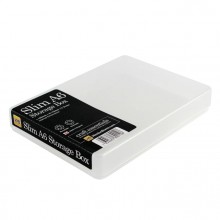
The two laying materials are kept in 2 separate boxes.
This material is successfully used in a large number of classes (also in secondary school) in free work.
pages 18th
leaves 18th
Age 7-11
Brief description Step-by-step development of basic geometric terms such as: diagonal, center line, congruent, equivalent, similar, ... 2 laying materials: "What belongs together?"
scope 15 index cards (squares), 12 index cards (triangles), 13 concept and symbol cards, 2 placement games
Contributors Saskia reel
manual Recommended school level (s): 3rd - 6th grade (material goes beyond the curriculum of the primary school!)
Manufacturing: All sheets should be laminated (recommended film thickness: 90-125 microns).
First cut off the protruding laminating edge and then cut the A4 page in half exactly in the middle - each gives 2 A5 index cards.
Pages not to be laminated: none
Pages or cards bound in a booklet: none
Content / curriculum reference: The children gain an insight into working with triangles, rectangles and squares and other geometric shapes. You will learn more about terms and technical terms such as: diagonal, center line, height, congruent, similar and equivalent.
Possible uses: The card index can be used as part of the free work from the 3rd grade. Experiences with the geometrical figures precede!
The card index is very focused on developing some terms. Individual work, perhaps also partner work, is therefore recommended.
Preparations: To work with this material, the children also need:
A work table (carpet is less suitable), the Montessori material "divided squares and triangles" (possibly also the two stands), (square) paper, a booklet, a ruler, an adhesive, scissors and writing utensils. It is advantageous if the paper is 10x10 in size - corresponds to the size of the metal figures. The prepared copies can also be used. (Copying templates for the divided squares and triangles are available at
www.lernmaterial.at !
How it works: The way of working is very clearly defined by the card index. The card index guides the children through work. They carry out appropriate instructions or actions on the material and then write them down.
Self-control: -
Experiences, tips, tips: Some children are real "card indexes". They love to work through files, make drawings and booklets. (Some not!)
This file gives a fairly clear structure. It makes it easier for some children, who tend to be indecisive, to do a “great job”. The work on the divided squares and triangles can take several hours of free time. The child can interrupt work on almost any index card and start again in the next free work.
The two laying materials are kept in 2 separate boxes.
This material is successfully used in a large number of classes (also in secondary school) in free work.