
- Pack
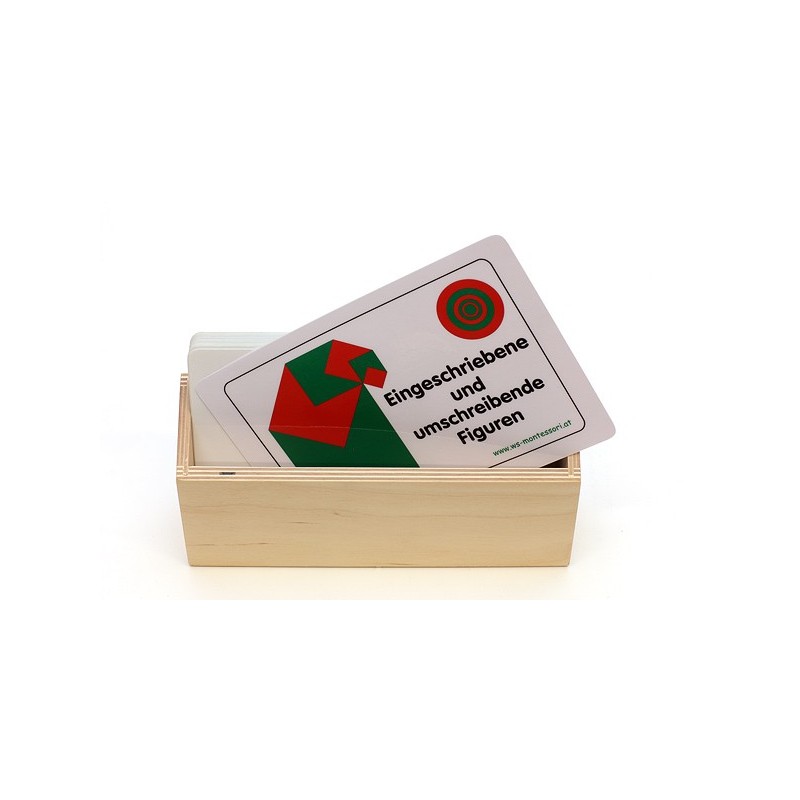
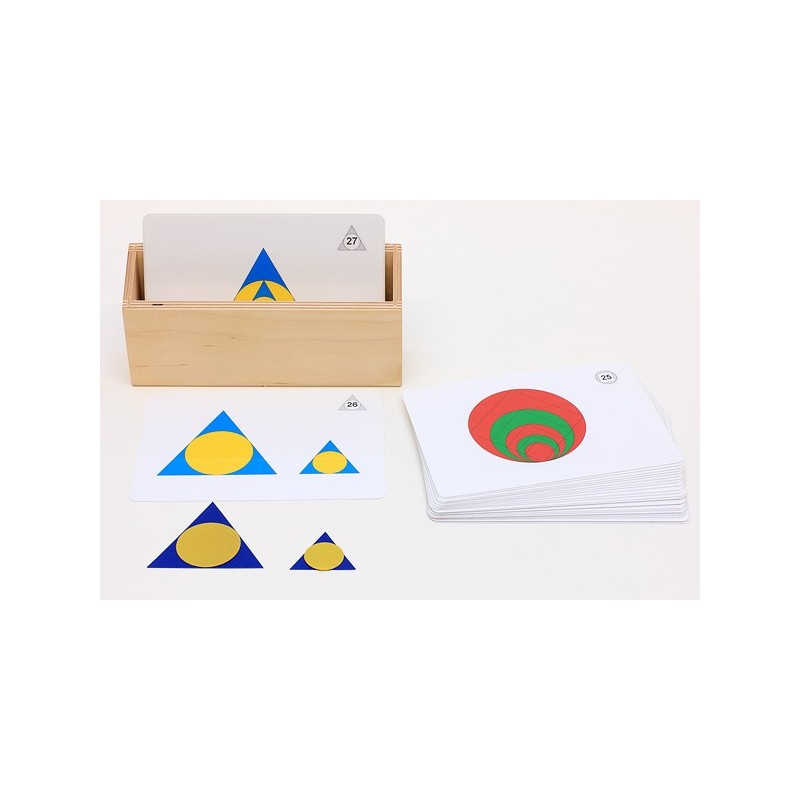


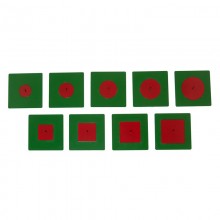
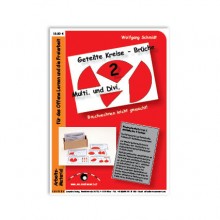
With this material, terms such as inscribed, concentric, lying in the vicinity and similar can be worked out according to the templates. The original material (plastic plate, not included in the scope of delivery) or the enclosed printouts and copy templates can be used.
Please note:
Montessori materials are NOT toys, but educational materials. Proper use requires appropriate training.
Montessori materials may contain small, rough, sharp, or other elements that could cause injury or damage if used improperly.
It may therefore only be used by children under the supervision of appropriately trained persons and in an appropriate environment.
Detailed description:
Detailed description:
ATTENTION!
On delivery our items are not laminated and not cut. The organizational aids such as boxes, card index boxes and the like that may be shown in the catalog are not included in the scope of delivery. We only used this accessory for demonstration purposes.
pages22leaves20Double sidedYes
Age
5-6, 7-11Brief descriptionWith this material, terms such as inscribed, concentric, lying in the vicinity and similar can be worked out according to the templates. The original material (plastic plate, not included in the scope of delivery) or the enclosed printouts and copy templates can be used.scopeIndex cards, copy templatesmanualRecommended school level (s):
can be used for all ages
Manufacturing:
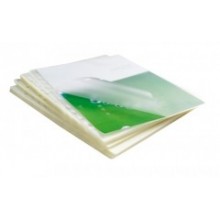
The sides with the index cards and the two sides with the squares, circles and triangles printed on both sides are to be laminated (recommended film thickness: 90-125 microns).
Index cards: First cut off the protruding laminating edge and then cut the A4 page in half exactly in the middle - each gives 2 A5 index cards.
Copy the two copy templates onto red and green copy cardboard and make them available to the children for cutting and gluing work.
Pages not to be laminated: 2 templates, 1 page with description
Pages or cards bound in a booklet: none
Content / curriculum reference:
Terms such as "registered" or "describing" can be experienced. The children have a variety of geometric experiences by adding various “patterns” or inventing new ones.
Secondary school students can use the material to derive the formula for calculating the diagonals of a square (“specialist card”).
Possible uses:
Possible use in the context of thematic circles or projects such as: geometry, geometric shapes (circles, triangles and squares).
Use in free work, in individual work or in partner work. The material can already be used as sensory material in the children's home by using it to lay, cut and glue different figures.
Preparations:
To work with this material, the children also need:
A work table (carpet is less suitable), a felt tray, the Montessori material "Inscribed and circumscribing figures", paper or a booklet, a glue and scissors.
Instead of the original Montessori material, you can also use the printouts provided here. (This means the two A4 pages printed on both sides with the circles, triangles and squares.)
How it works:
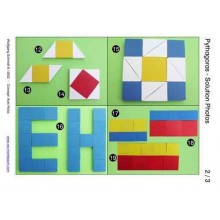
The children experiment with the material. The file should provide suggestions. It is not necessary to work through the cards from 1 to ... exactly. Found patterns can be added with the "crafting material", glued and documented in the form of a booklet.
Self-control:
The material itself controls itself.
Experiences, tips, tips:
To make it easier to cut out circles, it is recommended to use a circle and circle cutter. see: www.jokis.de
A suitable wooden box for the circles, triangles and squares is available at: ("Box with 3 fields for (circle / square / triangle) with lid")pages22leaves20Double sidedYespages22leaves20Double sidedYes5-6, 7-11Brief descriptionWith this material, terms such as inscribed, concentric, lying in the vicinity and similar can be worked out according to the templates. The original material (plastic plate, not included in the scope of delivery) or the enclosed printouts and copy templates can be used.scopeIndex cards, copy templatesmanualRecommended school level (s):
can be used for all ages
Manufacturing:
The sides with the index cards and the two sides with the squares, circles and triangles printed on both sides are to be laminated (recommended film thickness: 90-125 microns).
Index cards: First cut off the protruding laminating edge and then cut the A4 page in half exactly in the middle - each gives 2 A5 index cards.
Copy the two copy templates onto red and green copy cardboard and make them available to the children for cutting and gluing work.
Pages not to be laminated: 2 templates, 1 page with description
Pages or cards bound in a booklet: none
Content / curriculum reference:
Terms such as "registered" or "describing" can be experienced. The children have a variety of geometric experiences by adding various “patterns” or inventing new ones.
Secondary school students can use the material to derive the formula for calculating the diagonals of a square (“specialist card”).
Possible uses:
Possible use in the context of thematic circles or projects such as: geometry, geometric shapes (circles, triangles and squares).
Use in free work, in individual work or in partner work. The material can already be used as sensory material in the children's home by using it to lay, cut and glue different figures.
Preparations:
To work with this material, the children also need:
A work table (carpet is less suitable), a felt tray, the Montessori material "Inscribed and circumscribing figures", paper or a booklet, a glue and scissors.
Instead of the original Montessori material, you can also use the printouts provided here. (This means the two A4 pages printed on both sides with the circles, triangles and squares.)
How it works:
The children experiment with the material. The file should provide suggestions. It is not necessary to work through the cards from 1 to ... exactly. Found patterns can be added with the "crafting material", glued and documented in the form of a booklet.
Self-control:
The material itself controls itself.
Experiences, tips, tips:
To make it easier to cut out circles, it is recommended to use a circle and circle cutter. see: www.jokis.de
A suitable wooden box for the circles, triangles and squares is available at: ("Box with 3 fields for (circle / square / triangle) with lid")5-6, 7-11Brief descriptionWith this material, terms such as inscribed, concentric, lying in the vicinity and similar can be worked out according to the templates. The original material (plastic plate, not included in the scope of delivery) or the enclosed printouts and copy templates can be used.scopeIndex cards, copy templatesmanualRecommended school level (s):
can be used for all ages
Manufacturing:
The sides with the index cards and the two sides with the squares, circles and triangles printed on both sides are to be laminated (recommended film thickness: 90-125 microns).
Index cards: First cut off the protruding laminating edge and then cut the A4 page in half exactly in the middle - each gives 2 A5 index cards.
Copy the two copy templates onto red and green copy cardboard and make them available to the children for cutting and gluing work.
Pages not to be laminated: 2 templates, 1 page with description
Pages or cards bound in a booklet: none
Content / curriculum reference:
Terms such as "registered" or "describing" can be experienced. The children have a variety of geometric experiences by adding various “patterns” or inventing new ones.
Secondary school students can use the material to derive the formula for calculating the diagonals of a square (“specialist card”).
Possible uses:
Possible use in the context of thematic circles or projects such as: geometry, geometric shapes (circles, triangles and squares).
Use in free work, in individual work or in partner work. The material can already be used as sensory material in the children's home by using it to lay, cut and glue different figures.
Preparations:
To work with this material, the children also need:
A work table (carpet is less suitable), a felt tray, the Montessori material "Inscribed and circumscribing figures", paper or a booklet, a glue and scissors.
Instead of the original Montessori material, you can also use the printouts provided here. (This means the two A4 pages printed on both sides with the circles, triangles and squares.)
How it works:
The children experiment with the material. The file should provide suggestions. It is not necessary to work through the cards from 1 to ... exactly. Found patterns can be added with the "crafting material", glued and documented in the form of a booklet.
Self-control:
The material itself controls itself.
Experiences, tips, tips:
To make it easier to cut out circles, it is recommended to use a circle and circle cutter. see: www.jokis.de
A suitable wooden box for the circles, triangles and squares is available at: ("Box with 3 fields for (circle / square / triangle) with lid")

With this material, terms such as inscribed, concentric, lying in the vicinity and similar can be worked out according to the templates. The original material (plastic plate, not included in the scope of delivery) or the enclosed printouts and copy templates can be used.