Detailed description: Detailed description:
ATTENTION!
On delivery our items are not laminated and not cut. The organizational aids such as boxes, card index boxes and the like that may be shown in the catalog are not included in the scope of delivery. We only used this accessory for demonstration purposes.
pages 36
leaves 26
Double sided Yes
Age 7-11, 12-13
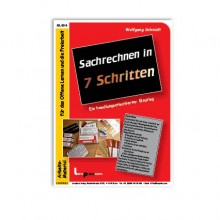
Brief description Optional elaboration - squaring / rooting, self-control on the back of the index card, where the other calculation method is offered, additionally: solution card with information for writing
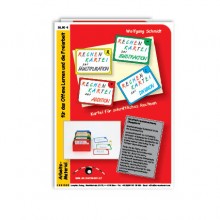
scope 20 task cards printed on both sides, 20 solution cards, 1 title card, 4 leading squares, 2 KV, 1 overview sheet of the tasks / solutions
Additional articles "Large root board" from Pruefl. To find under:
manual Recommended school level (s): 3rd - 6th grade
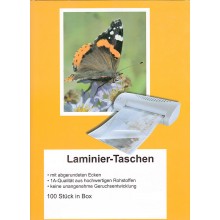
Manufacturing: Laminate the sheets (recommended film thickness: 90-125 microns). Then first cut off the protruding lamination edge and then halve the A4 page exactly in the middle - each gives 2 A5 index cards. Cut out the 4 leading squares.
The two templates do not need to be laminated.
Pages or cards bound in a booklet: none
Content / curriculum reference: Squaring and square rooting, experiences with the decadal system, categories
Possible uses: Use in free work, in individual work or in partner work
Preparations: To work with this material, the children also need:
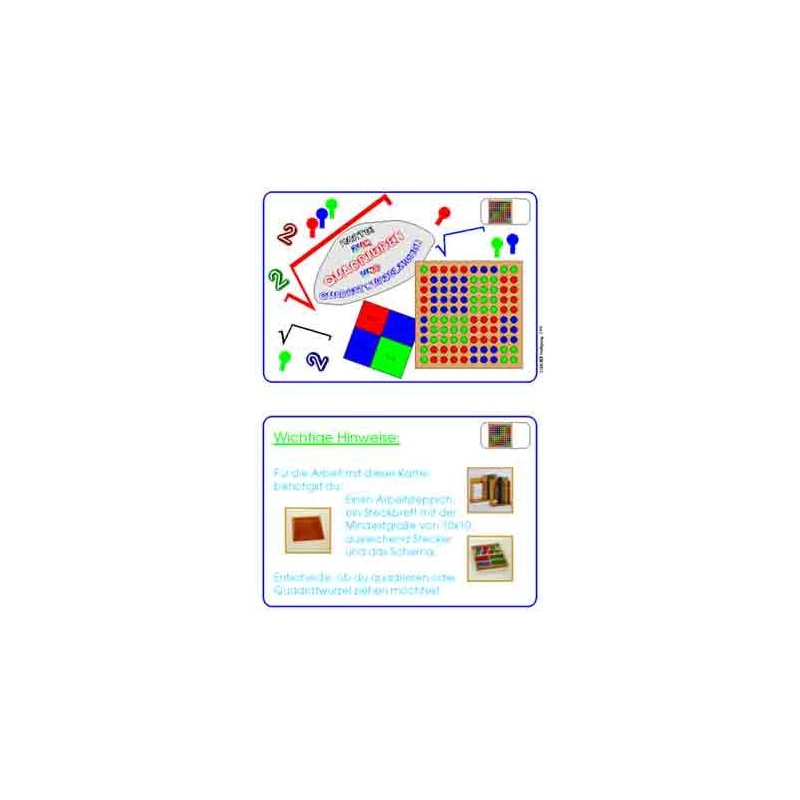
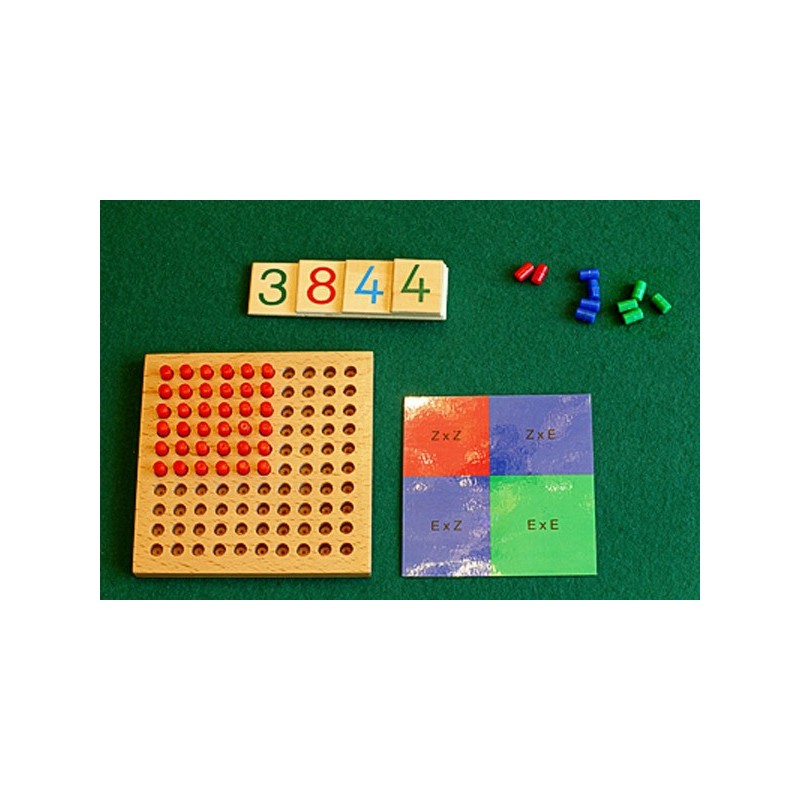
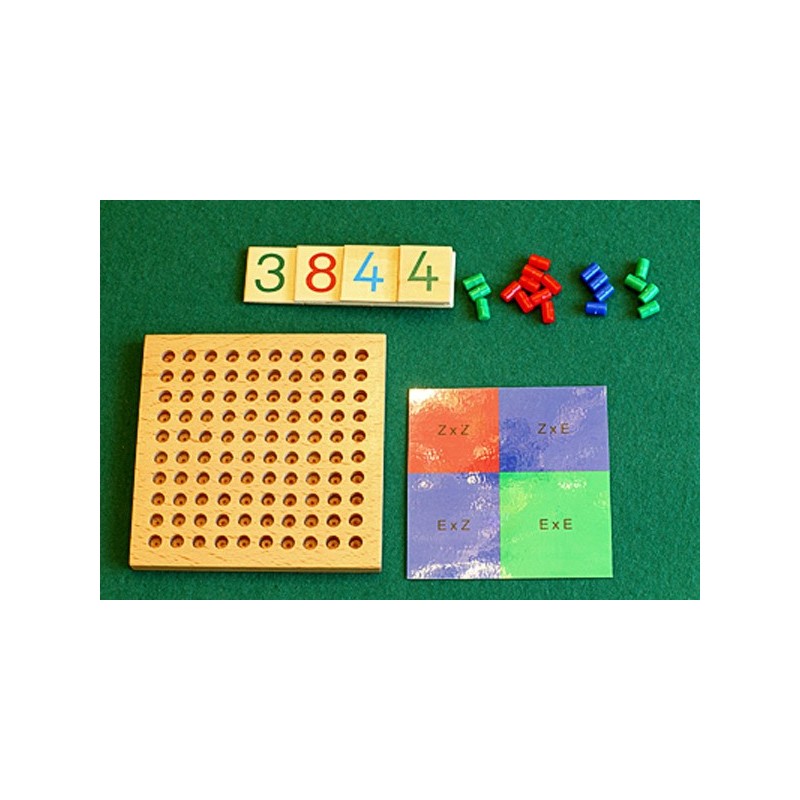
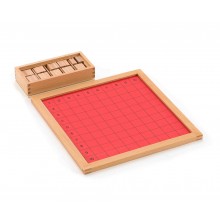
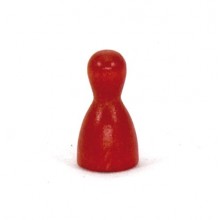
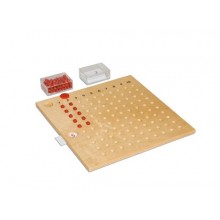
A work carpet or a felt tray, a work table, the number cards, a breadboard (at least 10x10), enough plugs in the colors green, blue and red, writing things
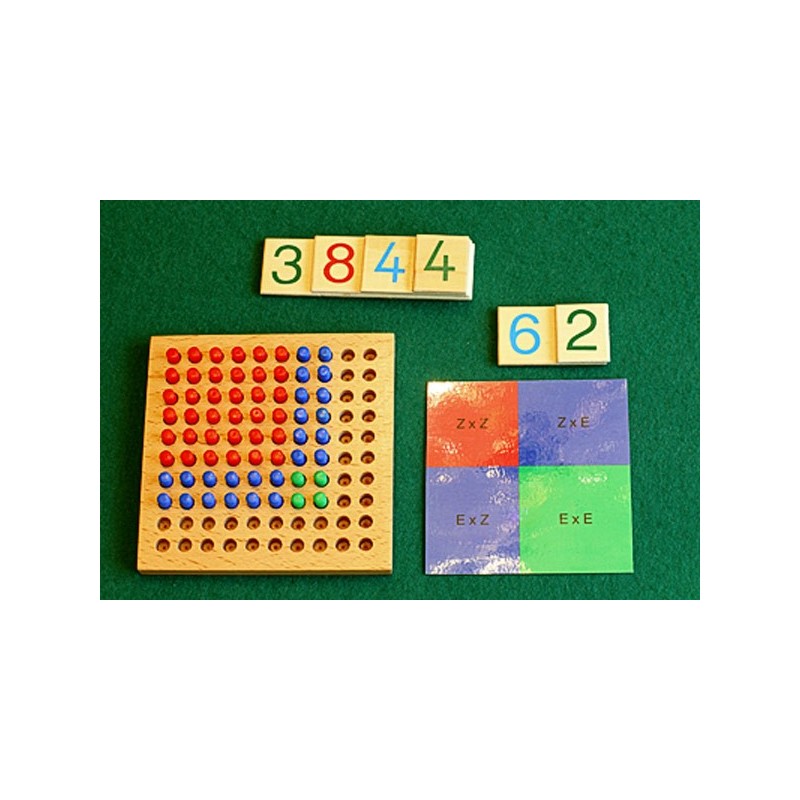
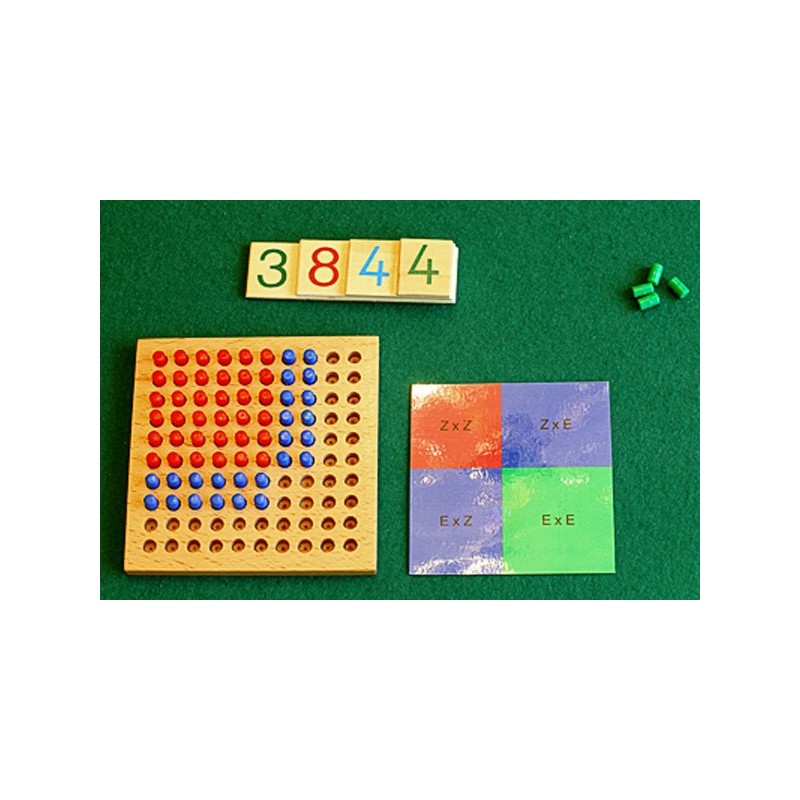
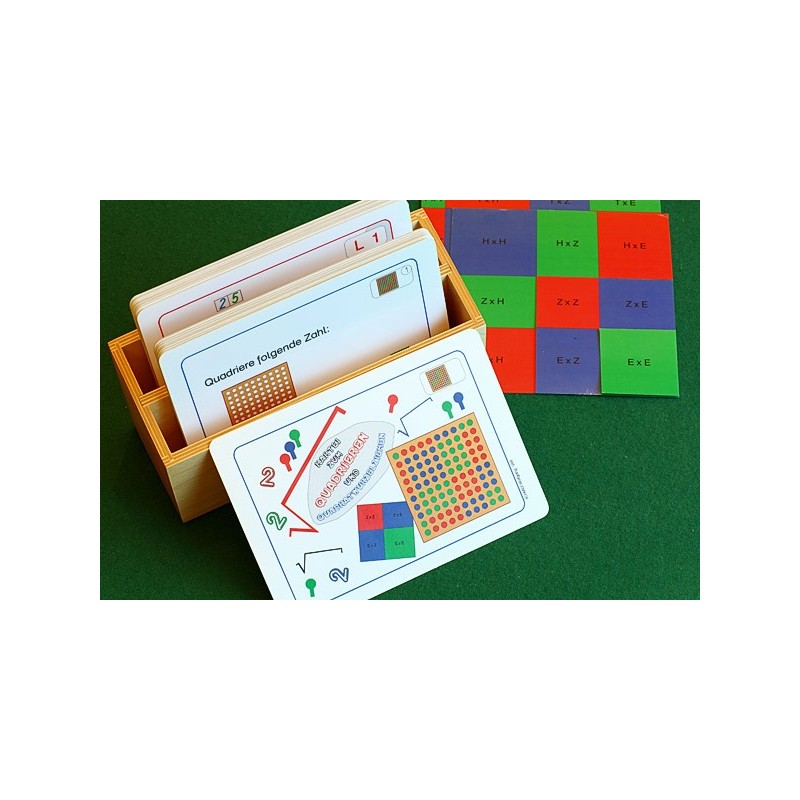
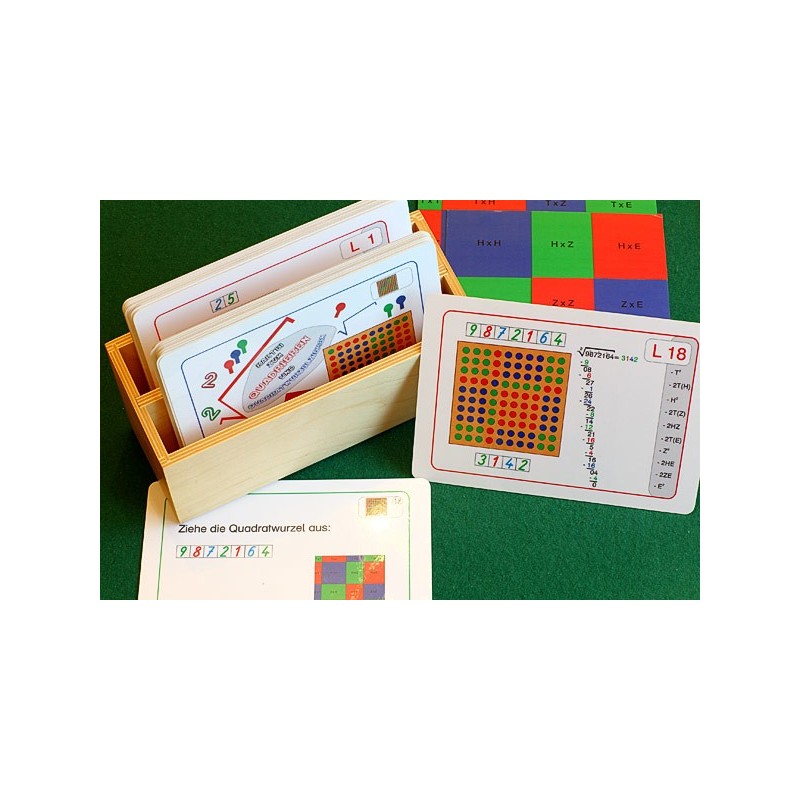
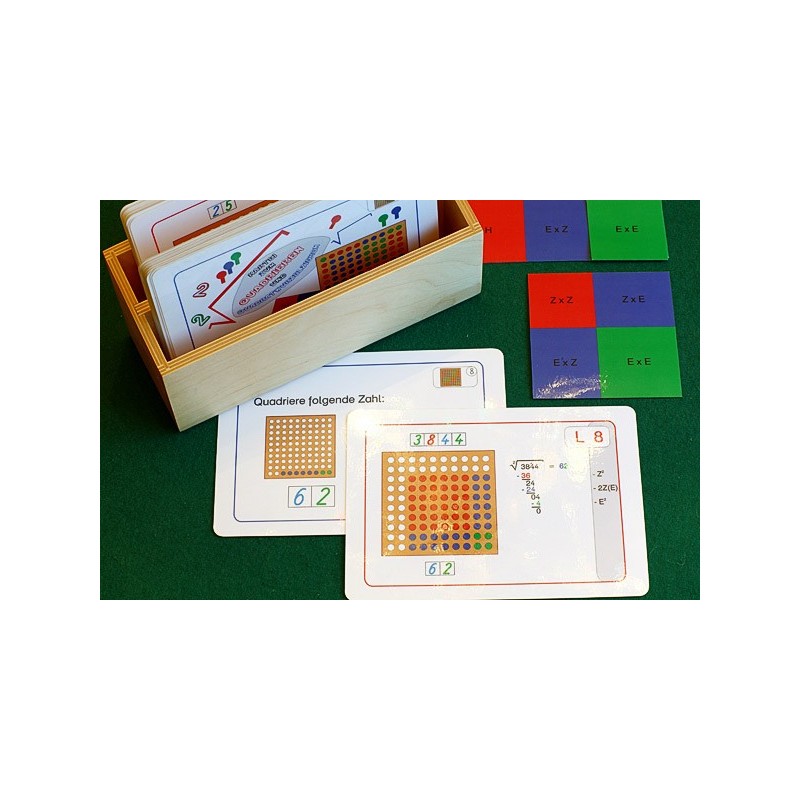
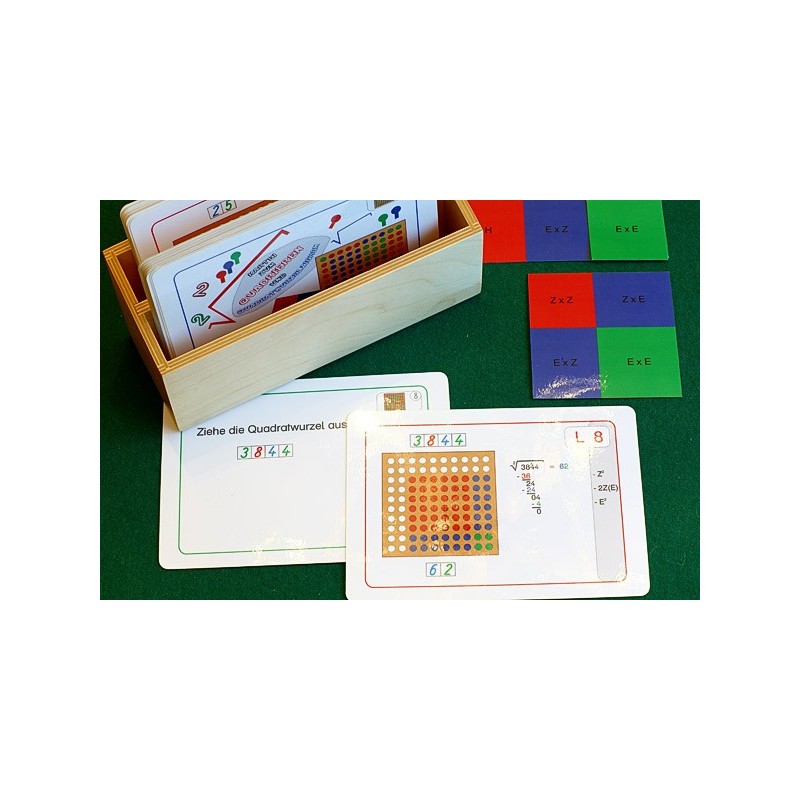
How it works: On one side of the index card there is information about squaring, on the other side there is information about root extraction. In this way, the calculation result on one side can be compared and checked with the information on the other side. The side with the task of squaring has a blue border, the side for rooting has a green border. The task number is the same on both sides. When squaring, the number is given in written and inserted form. When square rooting is used, the radicand is only available as a number. As a further help, the main square to be used is given for each task.
Self-control: 20 solution cards are available.
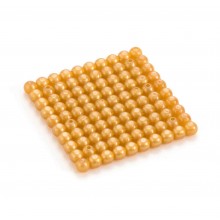
Experiences, tips, tips: The numbers are chosen so that there is no rest and all examples can be solved on a 10x10 breadboard. This has the advantage that the time spent plugging in is limited. In addition, size 10x10 breadboards are available everywhere or available at many schools. However, if the students subsequently solve examples with any number, a large breadboard and a corresponding number of plugs should be available. The color code for the digits is based on the three colors usual for Montessori: green (E, T, M), blue (Z, ZT) and red (H, HT). Exercises 19 and 20 are particularly difficult. These are radicals in whose roots there are one or two zeros. This means that some areas of the main square also do not appear! As an aid, I enclose gray strips with which these areas can be covered. Some pupils will not need the help offered (place colors for the numbers, leading squares, masking strips, ...). For these there are tasks in the form of a simple A4 task card. This is also printed on both sides. On one side there are again the 20 tasks for squaring, and on the back there are the corresponding tasks for root pulling.
A treatise on squaring / square root
extraction can be found on my website
www.lernsoft.at pages 36
leaves 26
Double sided Yes
Age 7-11, 12-13
Brief description Optional elaboration - squaring / rooting, self-control on the back of the index card, where the other calculation method is offered, additionally: solution card with information for writing
scope 20 task cards printed on both sides, 20 solution cards, 1 title card, 4 leading squares, 2 KV, 1 overview sheet of the tasks / solutions
Additional articles "Large root board" from Pruefl. To find under:
manual Recommended school level (s): 3rd - 6th grade
Manufacturing: Laminate the sheets (recommended film thickness: 90-125 microns). Then first cut off the protruding lamination edge and then halve the A4 page exactly in the middle - each gives 2 A5 index cards. Cut out the 4 leading squares.
The two templates do not need to be laminated.
Pages or cards bound in a booklet: none
Content / curriculum reference: Squaring and square rooting, experiences with the decadal system, categories
Possible uses: Use in free work, in individual work or in partner work
Preparations: To work with this material, the children also need:
A work carpet or a felt tray, a work table, the number cards, a breadboard (at least 10x10), enough plugs in the colors green, blue and red, writing things
How it works: On one side of the index card there is information about squaring, on the other side there is information about root extraction. In this way, the calculation result on one side can be compared and checked with the information on the other side. The side with the task of squaring has a blue border, the side for rooting has a green border. The task number is the same on both sides. When squaring, the number is given in written and inserted form. When square rooting is used, the radicand is only available as a number. As a further help, the main square to be used is given for each task.
Self-control: 20 solution cards are available.
Experiences, tips, tips: The numbers are chosen so that there is no rest and all examples can be solved on a 10x10 breadboard. This has the advantage that the time spent plugging in is limited. In addition, size 10x10 breadboards are available everywhere or available at many schools. However, if the students subsequently solve examples with any number, a large breadboard and a corresponding number of plugs should be available. The color code for the digits is based on the three colors usual for Montessori: green (E, T, M), blue (Z, ZT) and red (H, HT). Exercises 19 and 20 are particularly difficult. These are radicals in whose roots there are one or two zeros. This means that some areas of the main square also do not appear! As an aid, I enclose gray strips with which these areas can be covered. Some pupils will not need the help offered (place colors for the numbers, leading squares, masking strips, ...). For these there are tasks in the form of a simple A4 task card. This is also printed on both sides. On one side there are again the 20 tasks for squaring, and on the back there are the corresponding tasks for root pulling.
A treatise on squaring / square root
extraction can be found on my website
www.lernsoft.at